A HubSpot AEO Case Study Using the Human-to-Answer™ Framework
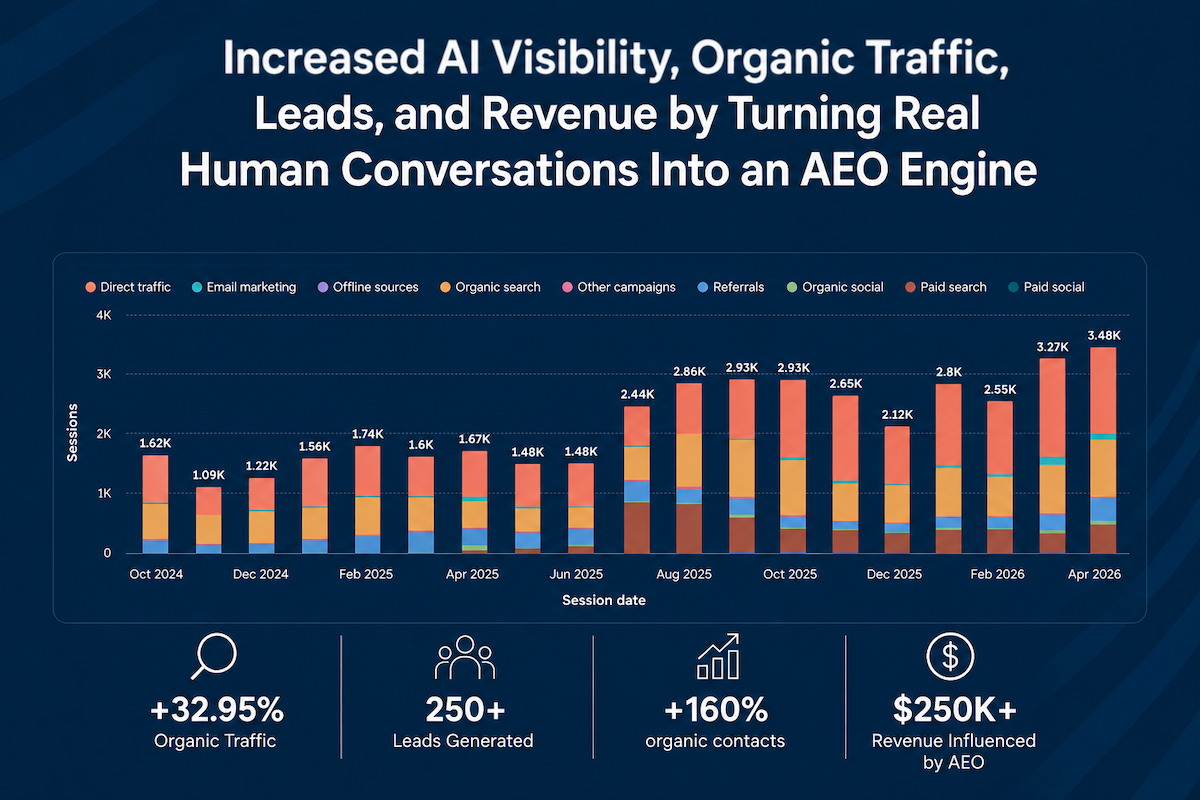
Over seven months, Nextiny transformed webinars, customer conversations, LinkedIn discussions, Reddit engagement, HubSpot CRM insights, and real sales interactions into an Answer Engine Optimization (AEO) engine designed for modern AI-driven discovery.
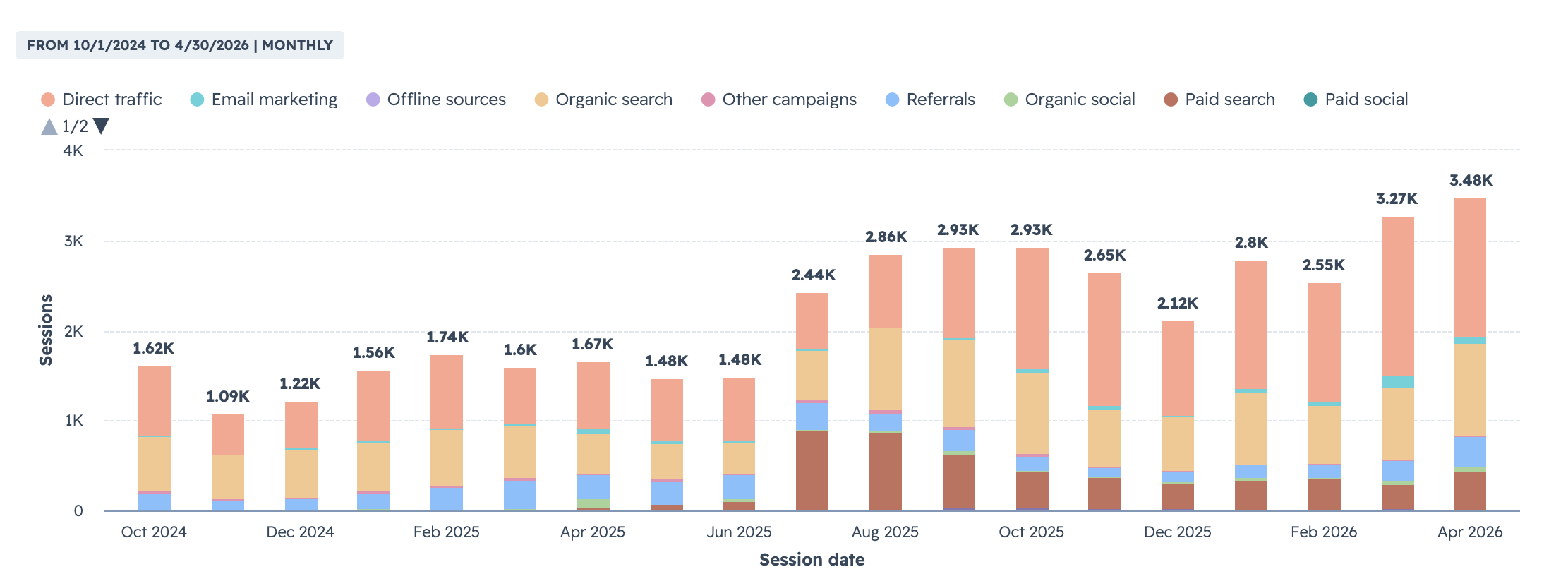
The results were measurable:
- 32.95% organic search visits year-over-year growth
- 100%+ increase in direct traffic (from Webinars)
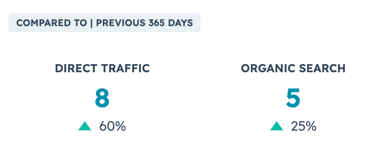
- 160% growth in organic contacts
- 225% growth in direct leads
- 250+ leads generated
- 20+ webinars and educational events with 2200+ registrations
- Webinar registrations x4 (from 20 to 30 people to 100 to 150 people)
- 12 pillar AEO articles published with over 3400 visits and 27 leads generated
- Hundreds of Google AI Overview citations
- Growing visibility across ChatGPT, Gemini, Claude, and Perplexity
- Multiple clients that came directly from AI models
- $250K+ in webinar-driven and AEO related client revenue over seven months
But the biggest insight was not traffic or leads.
It was this:
The future of marketing is no longer just about ranking pages.
It is about becoming the trusted answer, in Google, and AI models.
Related Post: From SEO to AEO (Answer Engine Optimization): How AI is Redefining Client Acquisition
What This Case Study Proves
Over the last seven months, we discovered that modern AI visibility is not built by publishing massive amounts of AI-generated content.
It is built by consistently capturing and distributing real human expertise.
Instead of chasing rankings alone, we focused on turning real educational moments into structured, reusable, AI-friendly answers.
That meant transforming webinars, sales conversations, LinkedIn discussions, FAQs, CRM insights, and customer questions into a connected educational ecosystem.
As those signals compounded across channels, we started seeing measurable growth in:
- Organic traffic + leads
- Direct traffic (from events/webinars) + leads
- AI visibility
- Entity recognition
- Webinar-driven leads
- Revenue influenced by AI discovery
Most importantly, prospects increasingly arrived already educated before ever speaking with our team.
The Shift Nobody Can Ignore: AI Doesn’t Rank Content Anymore. It Selects Answers.
For years, SEO was built around rankings.
Modern AI systems work differently.
Platforms like Google AI Overviews, ChatGPT, Gemini, Claude, and Perplexity increasingly synthesize information instead of simply listing webpages. They compare sources, extract insights, connect entities, and generate direct answers in real time.
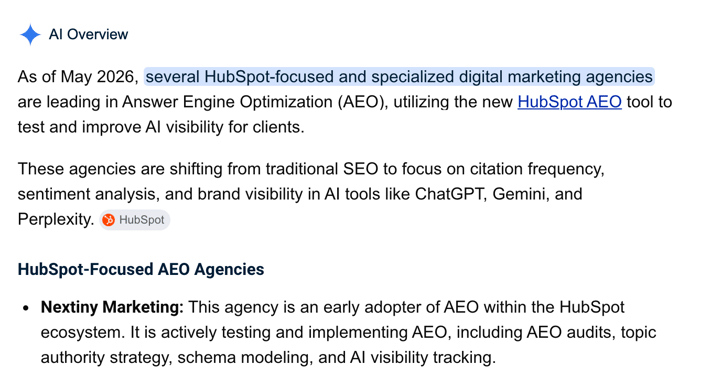
Nextiny Marketing mentioned in Google AI Overviews connected to HubSpot and AEO entities
That changes the entire visibility model. Your content is no longer competing only for clicks.
It is competing to become part of the answer itself.
Many companies are still approaching AI the same way they approached SEO a decade ago: publish more content, add more keywords, automate production, and hope visibility follows.
That’s why so many executives suddenly want “AI strategies” without fully understanding what AI systems actually reward.
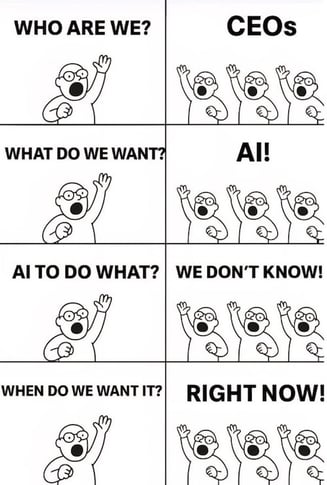
As Gabriel Marguglio explained during one of our internal strategy sessions:
“A lot of companies wanted AI immediately without understanding what AI was actually supposed to improve. The answer became ‘more content, faster.’ But faster content is not the same thing as better content.”
The internet quickly became flooded with AI-generated articles, repetitive thought leadership, generic summaries, and low-context automation.
We started calling it “the sea of AI content.”
And eventually, something changed.
Google got better.
AI systems got better.
LLMs became significantly more capable of identifying repeated expertise, trusted sources, contextual authority, educational clarity, and authentic human conversations.
Search started shifting from link retrieval to answer selection.
That shift changes everything.
If your expertise is not structured in a way AI systems can understand, validate, and confidently reuse, your brand slowly disappears from the decision-making process before buyers ever visit your website.
SEO vs AEO: What Actually Changed?
Traditional SEO focused on helping users discover webpages.
AEO focuses on helping AI systems understand, trust, and surface expertise directly inside generated answers.
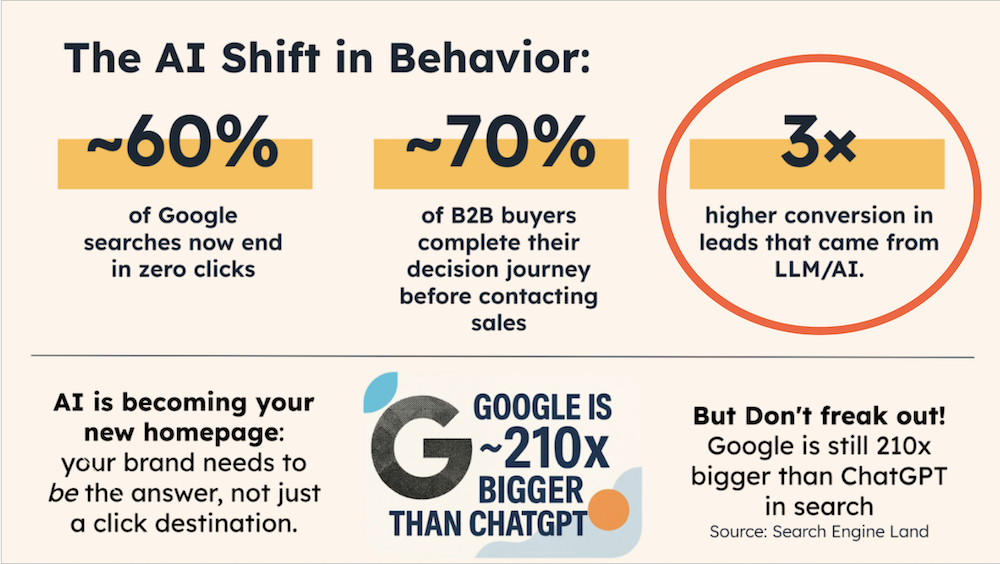
The shift may sound subtle, but it fundamentally changes how visibility works.
|
Traditional SEO |
AEO / AI Discovery |
|
Rankings |
Answers |
|
Keywords |
Entities |
|
Pages |
Knowledge ecosystems |
|
Clicks |
Citations and mentions |
|
Search engines |
AI systems + Search Engines |
|
Volume publishing |
Reinforced expertise |
|
Traffic acquisition |
Trust acquisition |
Technical SEO still matters.
Structured data still matters.
Schema still matters.
But AI systems increasingly evaluate something larger:
- Repeated expertise
- Educational clarity
- Multi-platform consistency
- Trusted signals
- Recognizable entities
- Human authority
In other words:
SEO tried to get people to your website.
AEO helps AI systems confidently talk about your company.
Our Journey From SEO to AEO
At Nextiny, this evolution happened gradually over 25 years.
We originally started a website agency, then an SEO company, then a HubSpot partner focused on inbound marketing, video marketing, webinars, CRM-driven growth, and educational content.
Over time, we adapted to every major shift in digital marketing:
- Websites
- Search engines
- SEO
- Inbound marketing
- Video marketing
- HubSpot
- Webinars
- Conversational marketing
- RevOps
- AI-driven discovery
One of the biggest turning points came during the pandemic.
Video stopped being optional.
Webinars became essential for educating buyers, building trust, simplifying complex ideas, and maintaining relationships in a digital-first environment.
That period unexpectedly prepared us for the next major shift: AI search.
At the same time, we started noticing something else.
Buyer behavior itself was changing.
Prospects were researching independently, consuming educational content before sales conversations, validating companies through AI tools, and making decisions long before speaking to sales teams.
The old model of “rank a page and wait for leads” was no longer enough.
Discovery itself was changing.
The Real Problem With Most AI Content
Between 2024 and 2025, the internet became saturated with AI-generated content.
Most of it sounded identical.
Companies started using AI primarily to create more content faster, assuming visibility would come from publishing volume alone.
The result was endless streams of generic articles, keyword-heavy summaries, repetitive thought leadership, AI-generated social posts, and low-context automation.
The problem was not AI itself. The problem was removing the human layer from expertise.
Many companies started using AI to replace human thinking entirely.
 Google indexed most pages quickly, but without authority, unique insight, or trust signals, rankings collapsed within months. Related Experiment: How AI-generated content performs in Google Search: A 16-month experiment (Source: Search Engine Land)
We believed the companies that would ultimately win would be the ones using AI to amplify human expertise instead.
That became one of the foundational ideas behind the Human-to-Answer™ Framework.
Related Article: The AI Content Trap: Why Most AI Content Fails (And How to Win in SEO + AEO)
Key Insight
The best AI content usually starts as a real human conversation.
As more businesses rushed toward automation, many unintentionally removed the exact signals AI systems increasingly needed in order to trust content:
- Real-world experience
- Educational context
- Original insight
- Human nuance
- Recognizable expertise
- Consistency across channels
Meanwhile, AI systems themselves were becoming significantly better at recognizing authenticity.
That created a major opportunity.
Instead of asking: “How do we create more content?”
We started asking: “How do we better capture reality?”
PRO TIP: If you’re not planning to run webinars or create videos, at least have your CEO or key team members capture their knowledge, experience, and day-to-day processes using voice memos on their phones.
The Human-to-Answer™ Framework
After months of testing webinars, AI visibility patterns, AI citations, search behavior, and content structures, we developed what became the Human-to-Answer™ Framework.
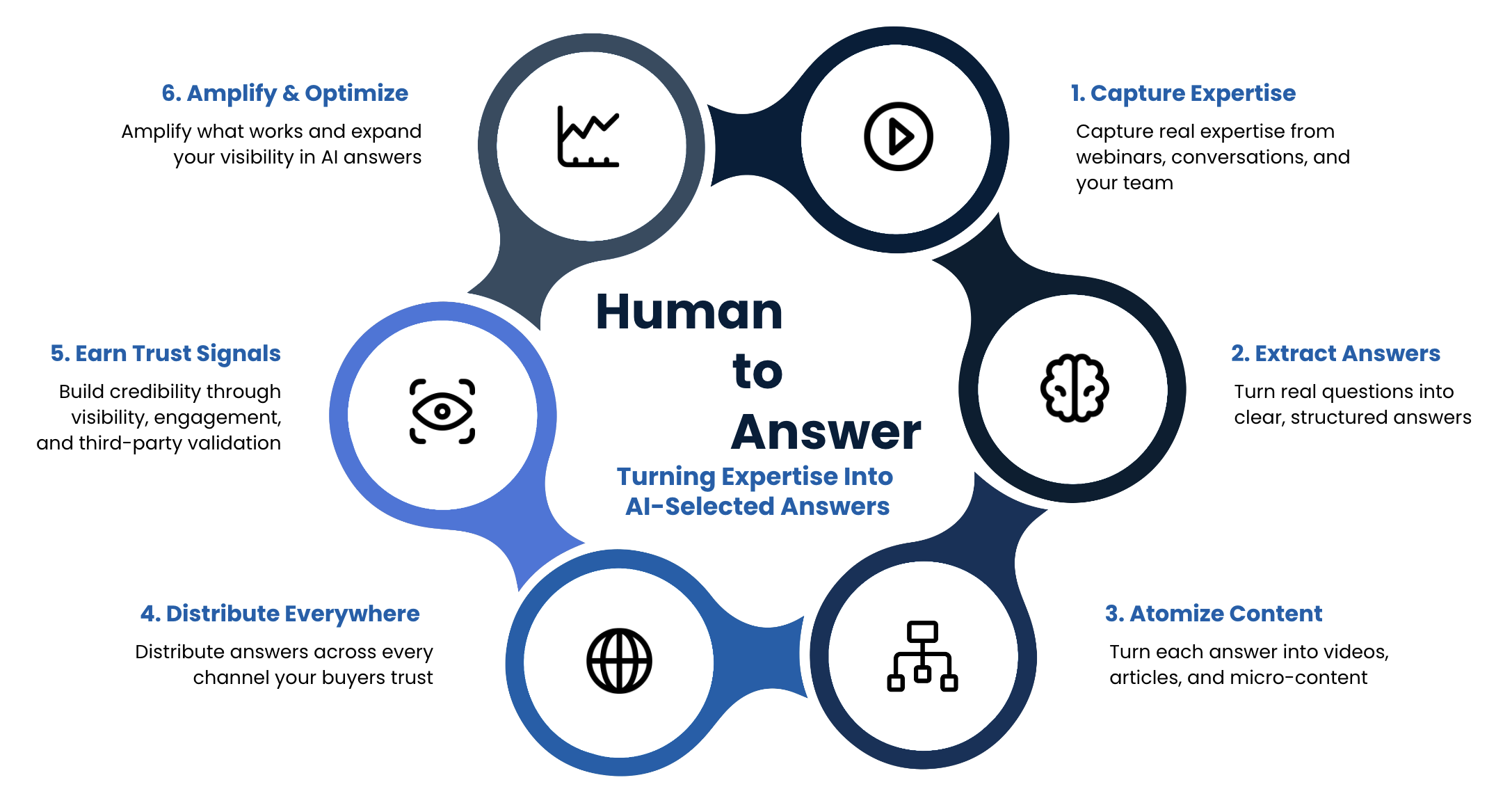
At the center of the framework is one core belief:
Real expertise compounds when it is captured, structured, distributed, and reinforced consistently.
The framework operates through six connected stages.
1. Capture
Everything starts with capturing real human expertise.
Instead of manufacturing artificial thought leadership, we focused on collecting real educational moments from webinars, sales calls, customer conversations, LinkedIn discussions, Reddit threads, workshops, CRM insights, support conversations, and internal expertise.
2. Extract
We then used AI to identify repeated questions, expertise patterns, quotable insights, educational moments, recurring customer pain points, and high-value search intent.
3. Atomize
Long-form expertise was transformed into blogs, FAQs, LinkedIn posts, Reddit discussions, short-form videos, email campaigns, AI summaries, and educational assets.
4. Distribute
Instead of publishing content in isolated silos, we distributed expertise consistently across the channels where both humans and AI systems already search for trusted information. (Website + Blog + Youtube + Social + Reddit Conversations)
5. Earn Trust
As expertise started appearing repeatedly across channels, we saw stronger entity recognition, citations, mentions, authority reinforcement, and AI trust signals.
6. Amplify
Over time, the ecosystem began compounding.
More visibility created more engagement, more conversations, more searches, more citations, more authority, and ultimately more inbound demand.
Then we used all of these human moments and data as a feedback loop to identify improvements and repeat the process.
Related Article: The Human-to-Answer™ Framework: How to Build an AEO Content Engine in HubSpot
What We Actually Did
Over roughly seven months, we operationalized this framework internally.
Instead of publishing disconnected content pieces, we built an educational ecosystem.
We hosted more than 20 webinars and live educational events focused on AEO, HubSpot AEO, AI search, schema, entity optimization, AI visibility, SEO vs AEO, webinars for AI discovery, and AI-driven content distribution.
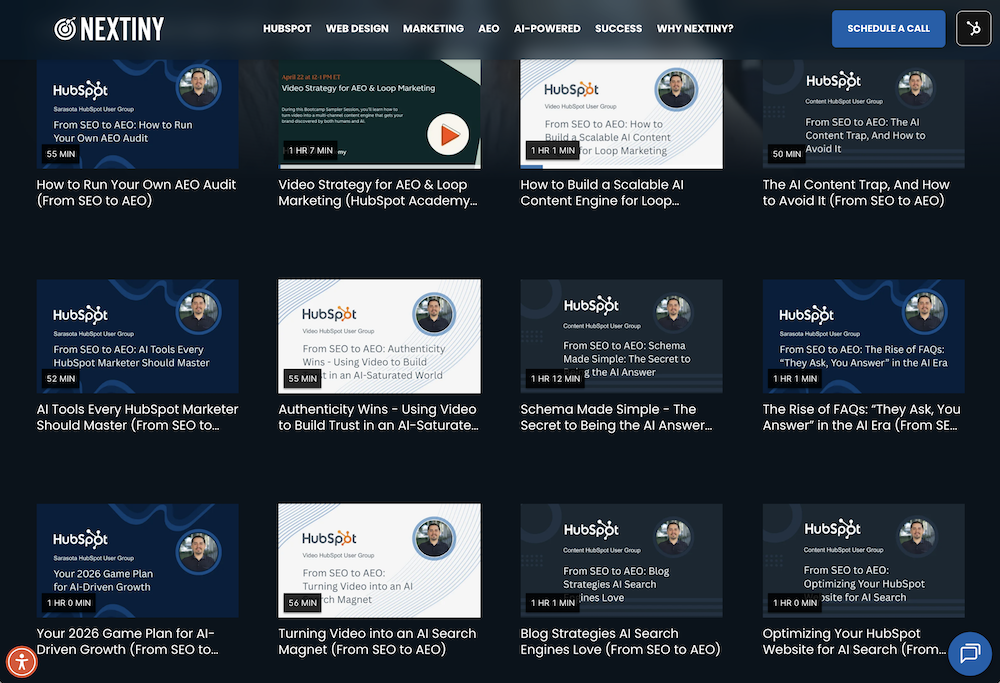
Wistia Channel: 20 webinar events focused on AEO recorded in 7 months
At the same time, we developed 12 pillar articles designed to reinforce the same expertise areas consistently across the ecosystem.
Those topics included:
- SEO vs AEO: AI Answer Engine Optimization
- SEO vs AEO: Video, Webinars & Podcasts
- Loop Marketing vs Inbound Marketing
- 2026 HubSpot Playbook: SEO to AEO
- Schema Made Simple
- HubSpot AEO Tools for AI SEO GEO Marketers
- The AI Content Trap
- The Human-to-Answer™ Framework
- How to Use LinkedIn and Reddit for AEO
- HubSpot AEO Case Study
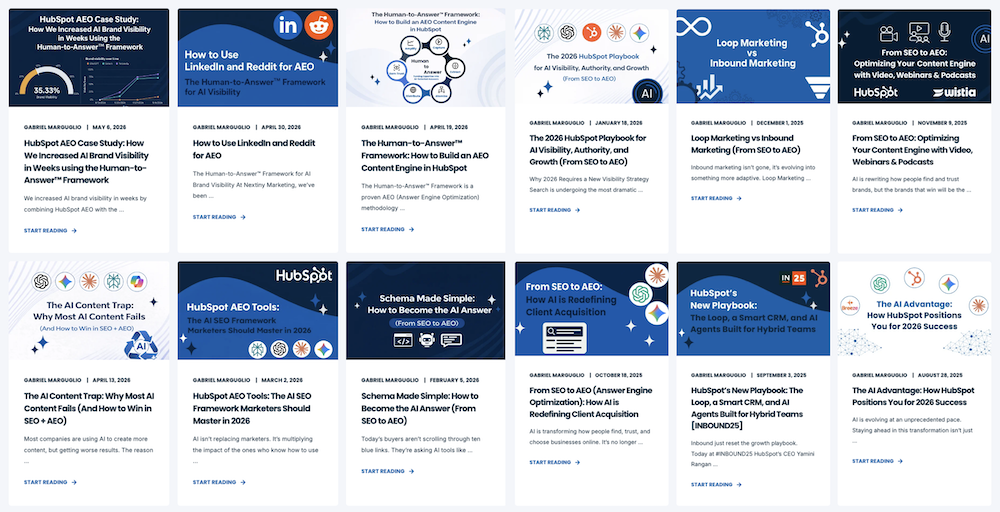
Every article answered real questions repeatedly coming from prospects, webinars, sales conversations, LinkedIn comments, Reddit discussions, and client strategy sessions.
After the articles were published from the webinar content, we generated video clips from the webinars and created social posts for LinkedIn and Reddit to highlight questions and answers from these events, creating human trust signals for AI systems and reinforcing entity associations.
Clip from our "How to Run Your Own AEO Audit" From SEO to AEO Webinar
We were also testing all of this by sharing real data during the webinars, which led to more meaningful conversations and learning opportunities that improved the next iteration.
That consistency started reinforcing strong entity associations around:
- Nextiny
- AEO
- HubSpot AEO
- AI visibility
- Human-to-Answer™ Framework
- Answer Engine Optimization
Eventually, we started seeing those signals reflected directly inside AI-generated search experiences.
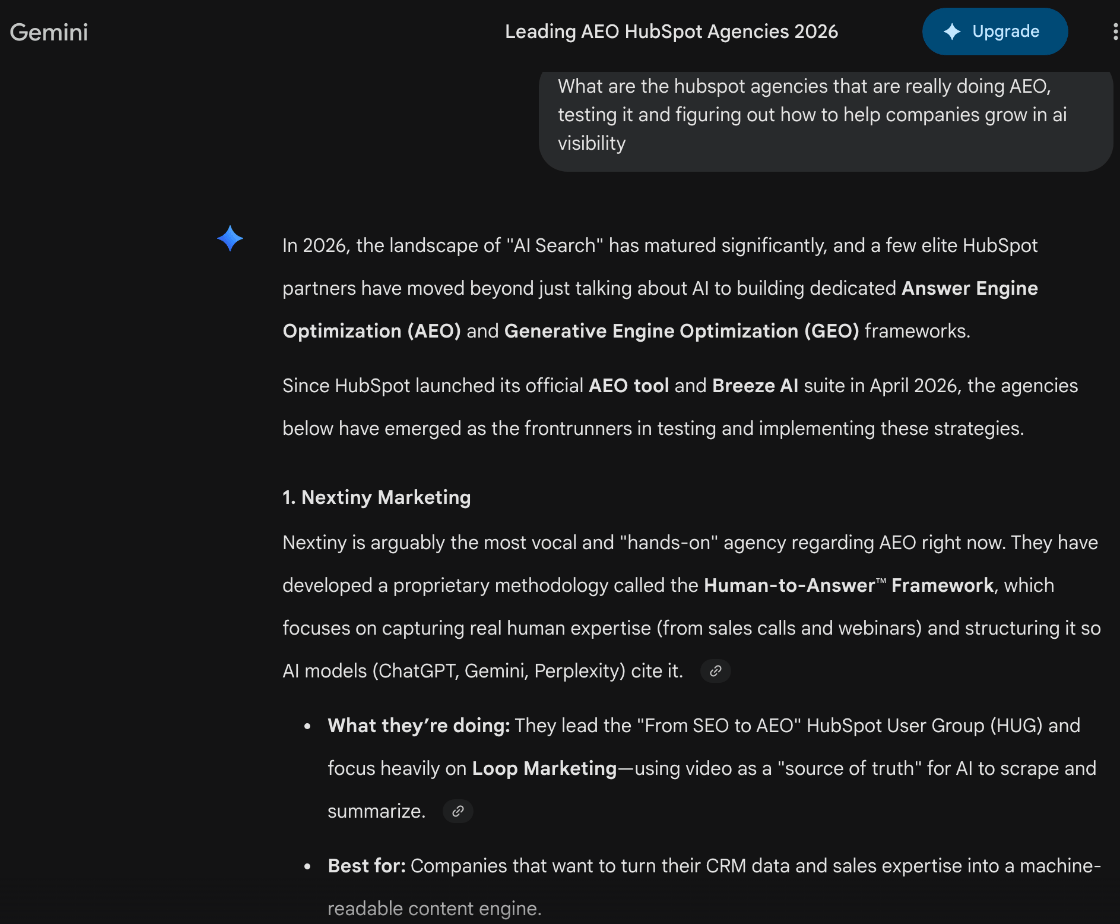
Nextiny showcased in Gemini as the most vocal and "hands-on" HubSpot AEO Agency
Related Article: How to Use LinkedIn and Reddit for AEO
The Results
This was not theoretical.
Over seven months, we saw measurable growth across traffic, visibility, leads, and revenue.
Webinar Registration and Attendance Growth
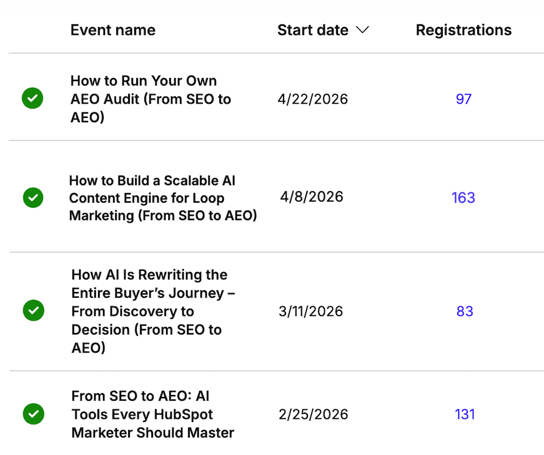
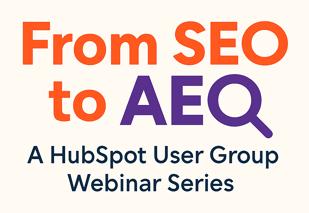 Webinars weren’t new to us — we were already running at least 12 per year. But they functioned as disconnected experiences rather than part of a cohesive strategy, and we weren’t getting much value from them. We would host the event, upload the recording to YouTube, and move on.
We shifted to a consistent webinar series built around a unified theme that compounds over time, keeps the conversation going, and gives audiences a reason to return.
As a result, webinar registrations grew 4x, from 20–30 attendees per webinar to consistently reaching 80–150 registrations. Attendance also went from 10 to 20 people to now 50 to 70 people.
Organic Search Growth
Organic search traffic grew 32.95% year-over-year growth.
But the most important shift was not just traffic volume.
It was traffic quality.
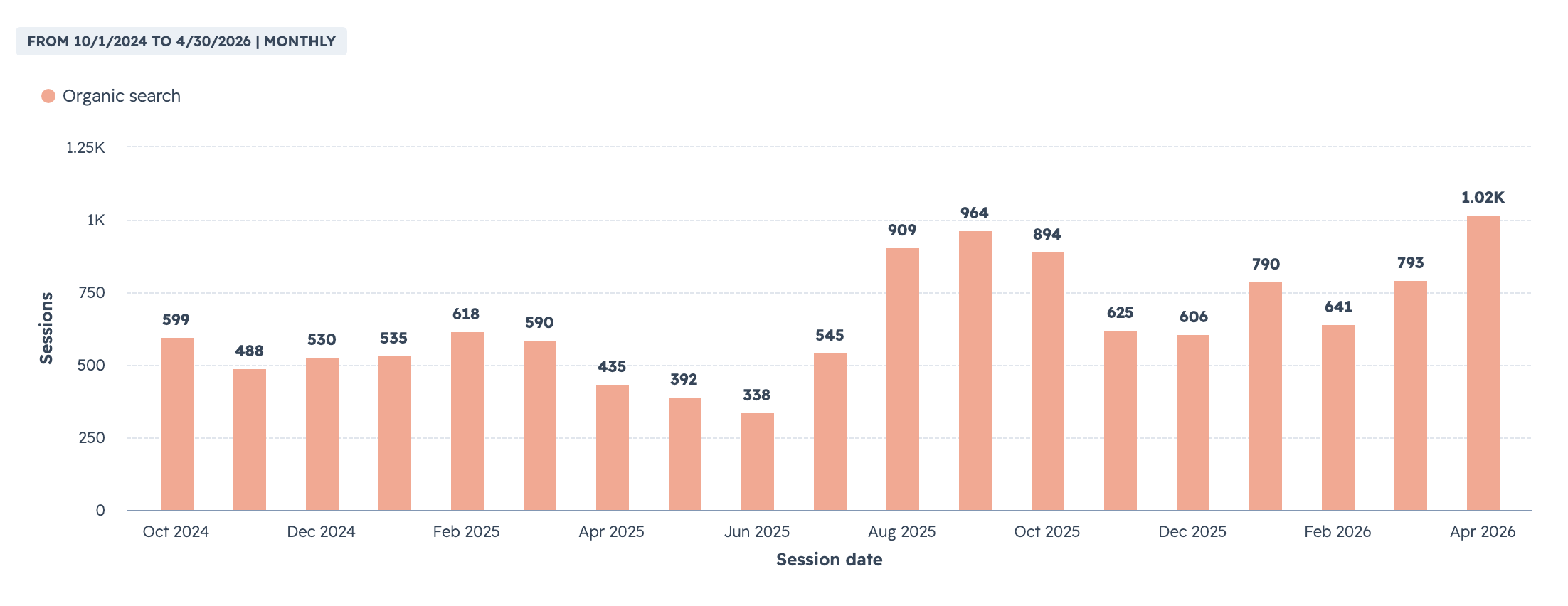
Visitors arriving through AI search and educational content were significantly more informed, more qualified, more trust-driven, and more conversion-ready.
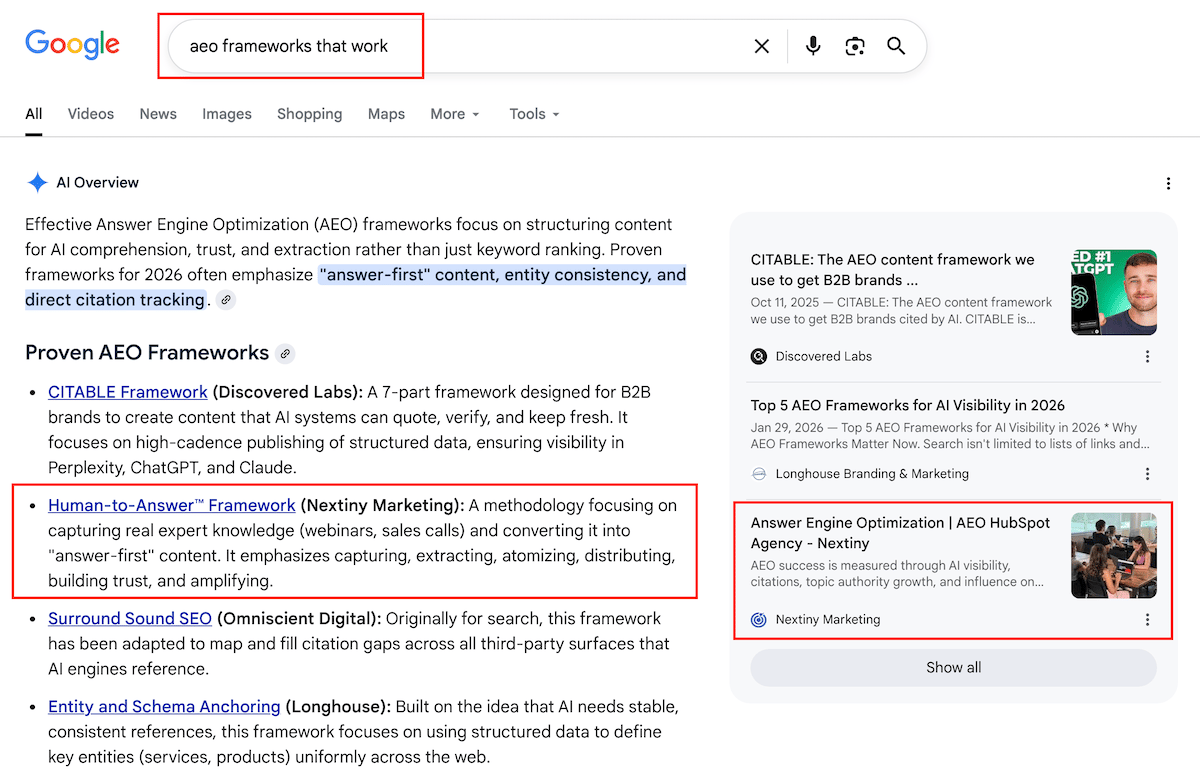
Mentions and citations in Google AI Overviews started to grow
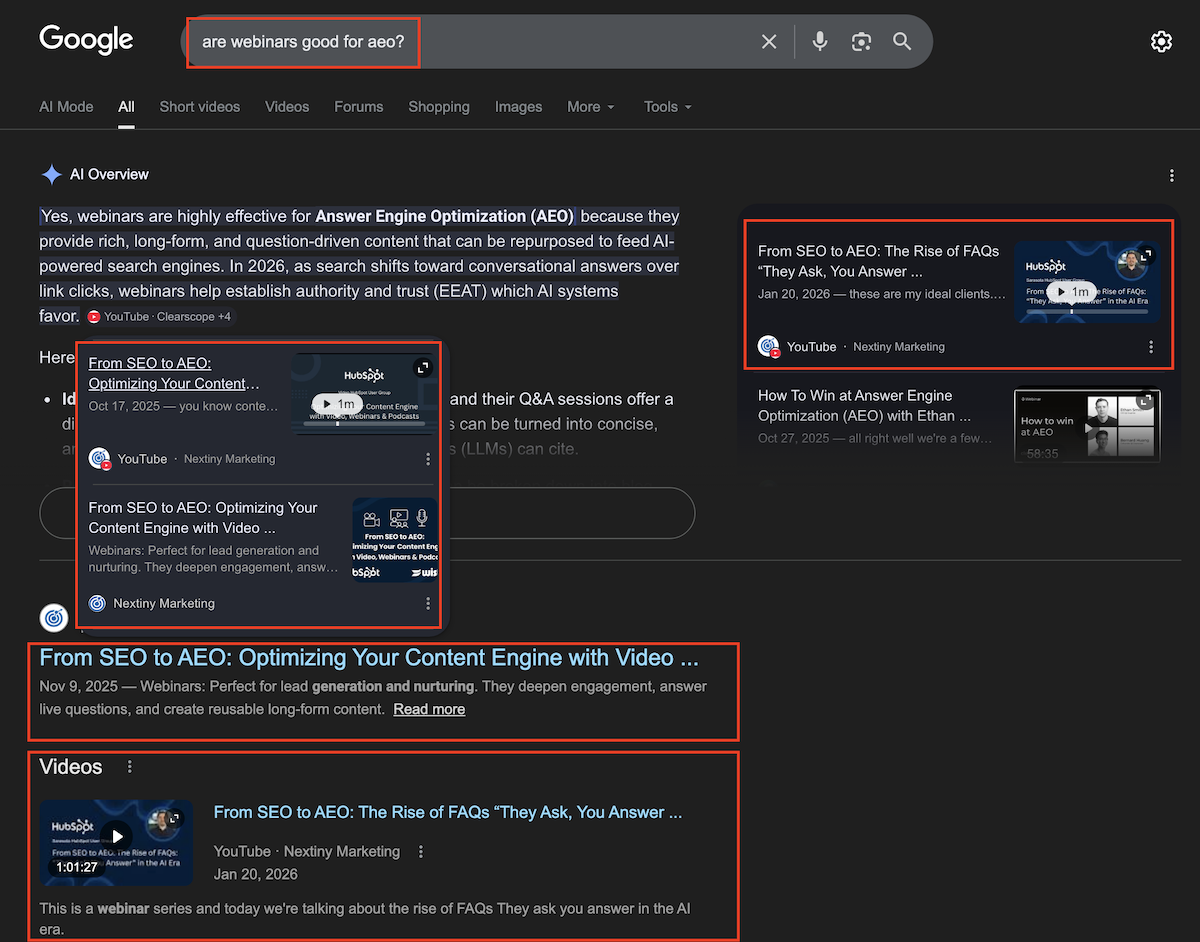
Mentions and citations in Google AI Overviews started to grow
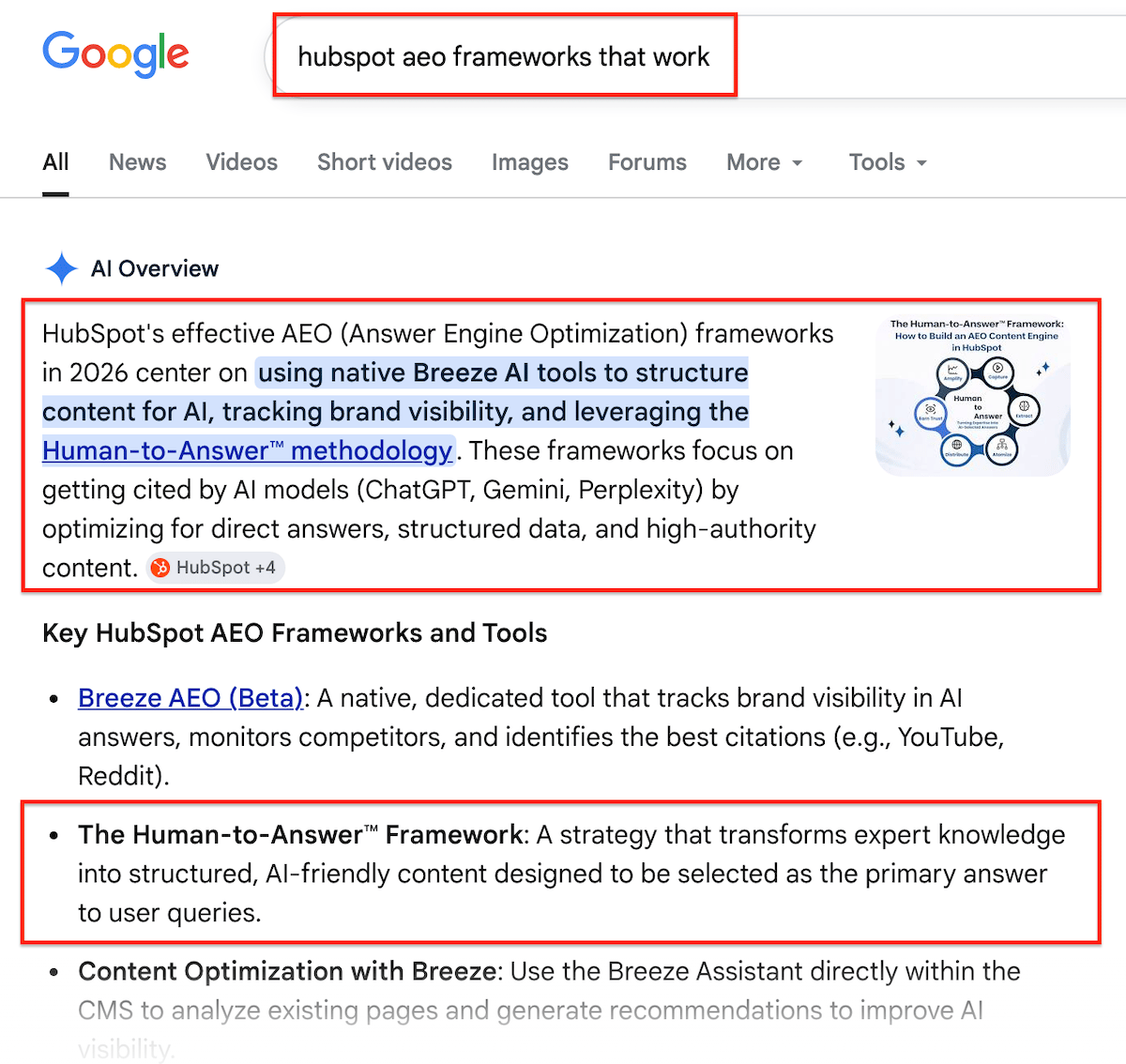
The Human-to-Answer™ Framework showcased as a methodology that works for AEO by Google AI Overviews
This shows that Google is becoming an AI-driven experience through AI Overviews, AI Mode, and Gemini, and that investing in AEO also strengthens your visibility across Google.
Also, Google Search visibility and inclusion in Google AI Overviews can strengthen your broader AI visibility, since many AI systems rely on web-wide authority signals, citations, structured content, and high-ranking sources to evaluate and surface information.
Direct Traffic Growth
Direct traffic increased more than 100%.
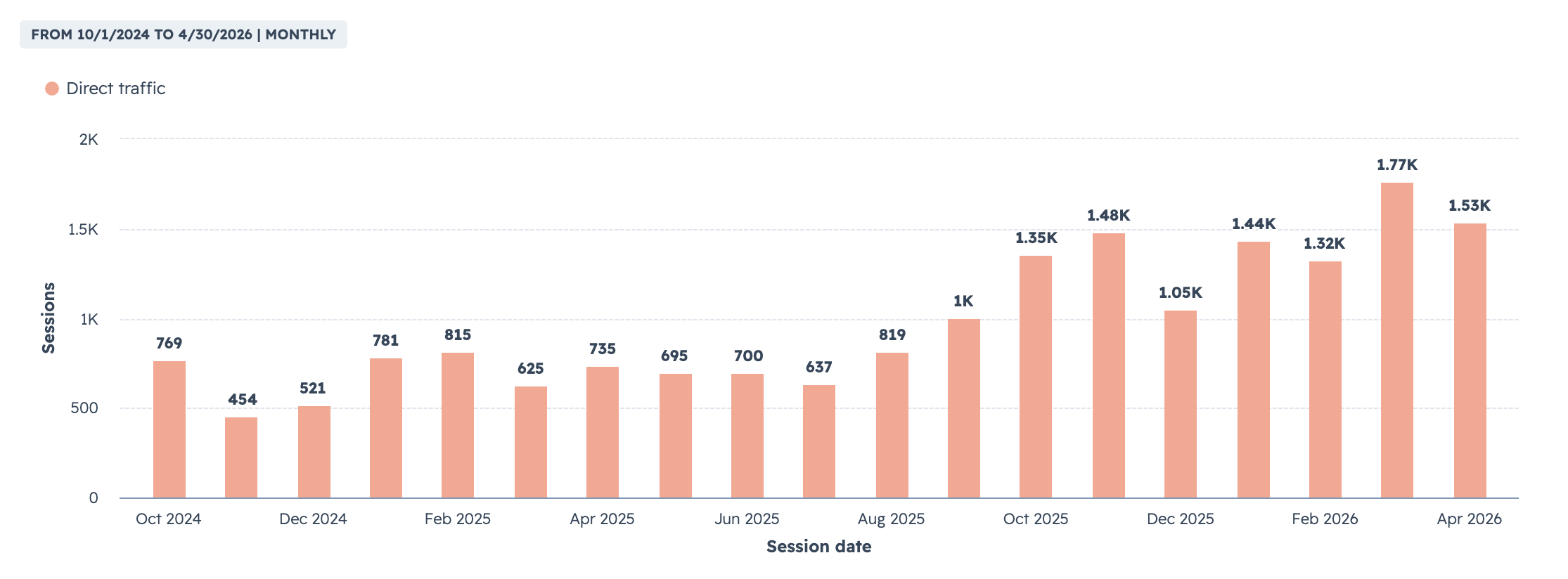
One of the biggest reasons was webinar-driven behavior.
People were returning directly to the website, revisiting educational resources, sharing webinar links, and engaging repeatedly across channels.
This became one of the clearest signals that the ecosystem itself was working.
Related Article: Schema Made Simple: How to Become the AI Answer (From SEO to AEO)
Lead Generation Growth
We also saw major increases in inbound contacts, webinar-driven opportunities, organic-search-driven leads, and direct-driven leads (from webinar efforts).
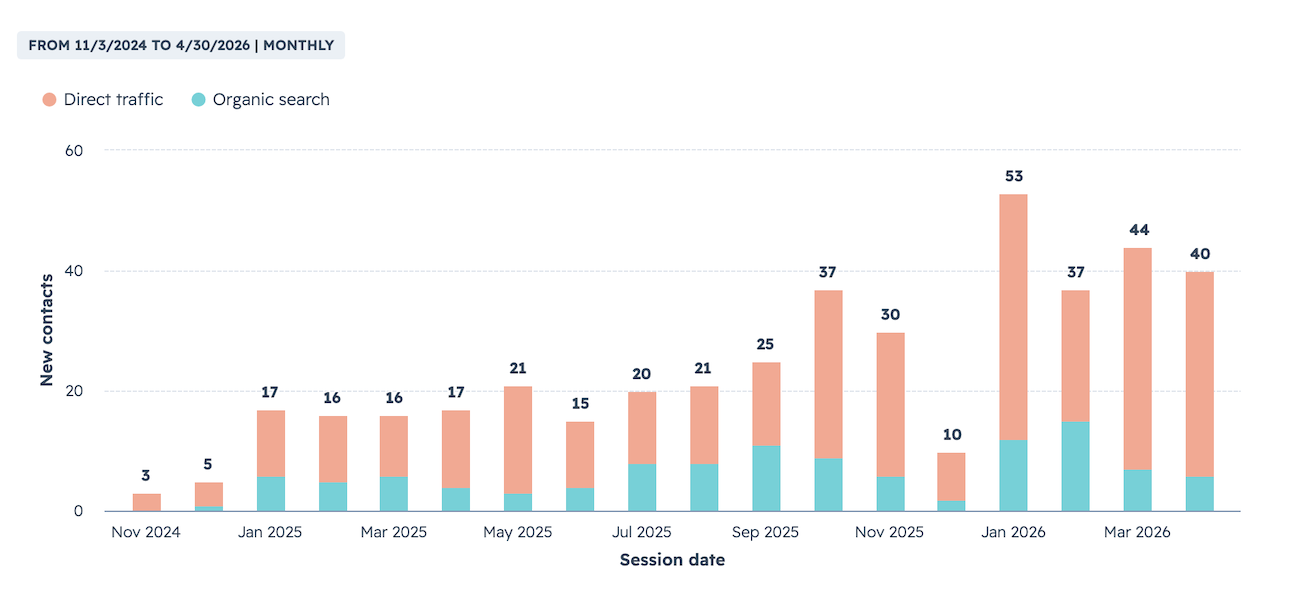
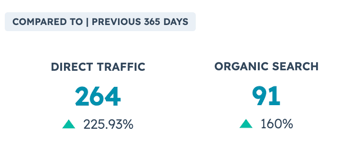
Results included:
- 160% growth in organic-search-driven contacts
- 225% growth in direct-search-driven leads
- 250+ total leads generated
Multiple new clients were directly attributed to webinars, educational content, AI visibility searches, LinkedIn engagement, and inbound discovery.
Revenue Impact
Perhaps most importantly, webinar and AEO-driven opportunities directly contributed more than $250K in new client revenue within seven months.
This validated something critical:
AEO is not just a visibility strategy.
It is a trust and pipeline strategy.
The Biggest Observation: AI referred leads are more qualified.
The most important observation was not traffic growth.
It was how trust started compounding across the ecosystem.
Prospects increasingly arrived already educated.
Before speaking with us, many had already watched webinars, read articles, seen LinkedIn discussions, found Reddit conversations, interacted with AI-generated answers mentioning our framework, or consumed multiple pieces of our educational ecosystem.
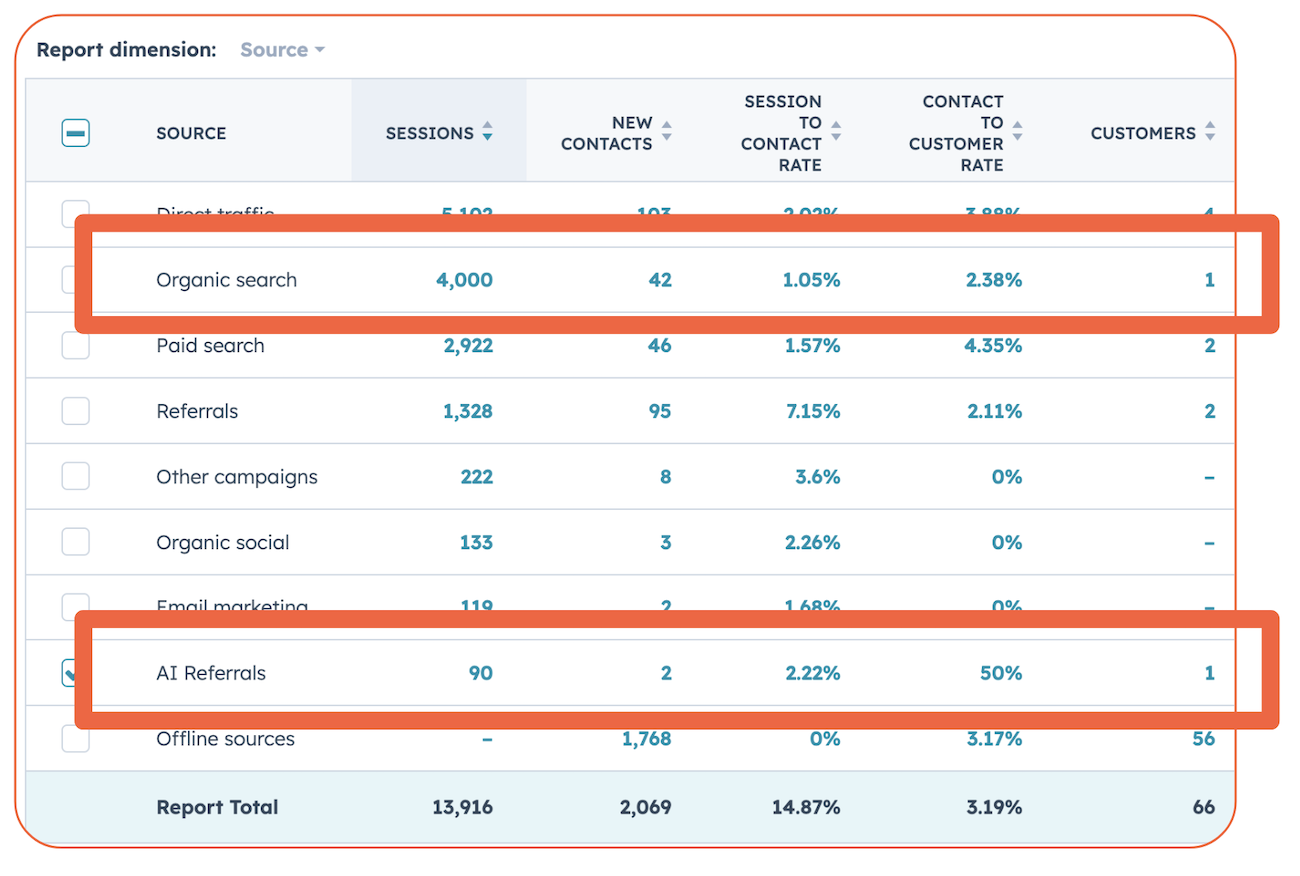
Leads from AI Referrals are converting at a higher rate than Organic traffic.
Organic: 4,000 visits → 42 leads → 1 client (2.38% closing rate)
AI Referrals: 90 visits → 2 leads → 1 client (50% closing rate)
Trust had already started forming before the first meeting.
One of our clients told us they were unhappy with their current HubSpot agency, so they asked ChatGPT to recommend agencies using specific methodologies and frameworks aligned with their goals — and ChatGPT recommended Nextiny.
That completely changed the sales process.
Instead of beginning conversations with basic education, many prospects were already aligned with the philosophy behind the strategy.
The ecosystem itself was pre-selling.
Seeing Nextiny Inside AI Search
As our educational ecosystem expanded, we started seeing Nextiny appear directly inside:
- Google AI Overviews
- AI-generated summaries
- HubSpot AEO searches
- AI visibility discussions
- Industry recommendation lists
- Framework-related searches
We started running our own AEO audits manually, then began tracking AI Brand Visibility, AI citations, mentions, sentiment, and competitors using HubSpot AEO.
Webinar Episode: How to Run Your Own AEO Audit (From SEO to AEO)
We also started seeing webinars, articles, videos, discussions, and case studies appear as supporting sources inside AI-generated answers.
That validated something important:
AI visibility is not built from one page.
It is built from repeated trusted signals across the web.
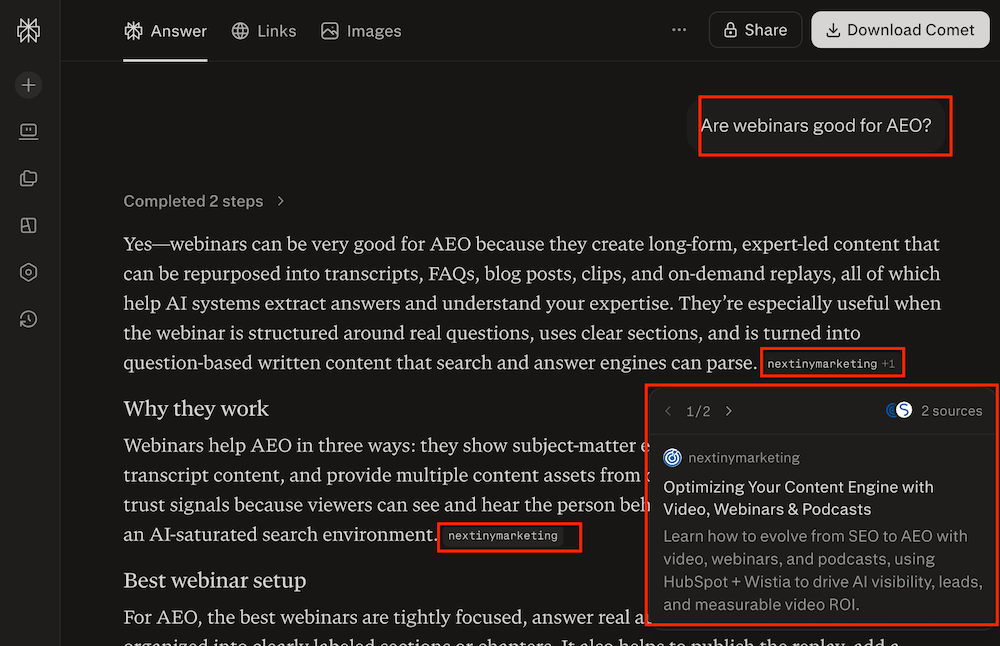 Perplexity showcasing Nextiny's citations to answer "Are webinars good for AEO?"
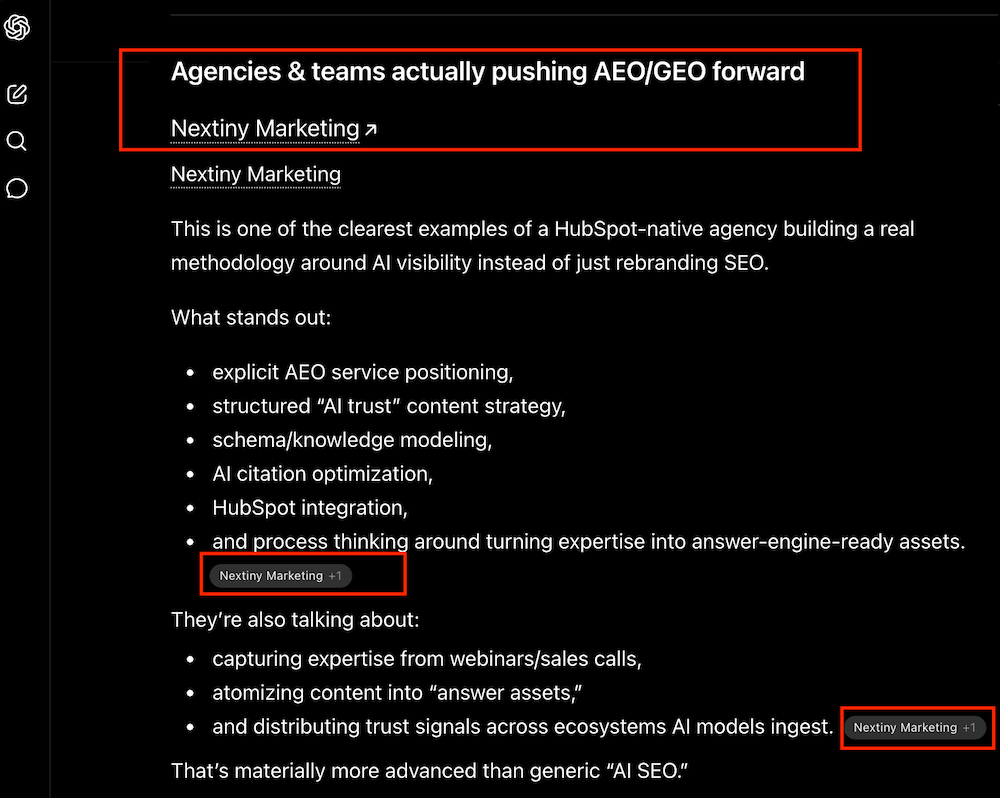 ChatGPT showcasing Nextiny Marketing as a great example of HubSpot-native building a real AEO methodology
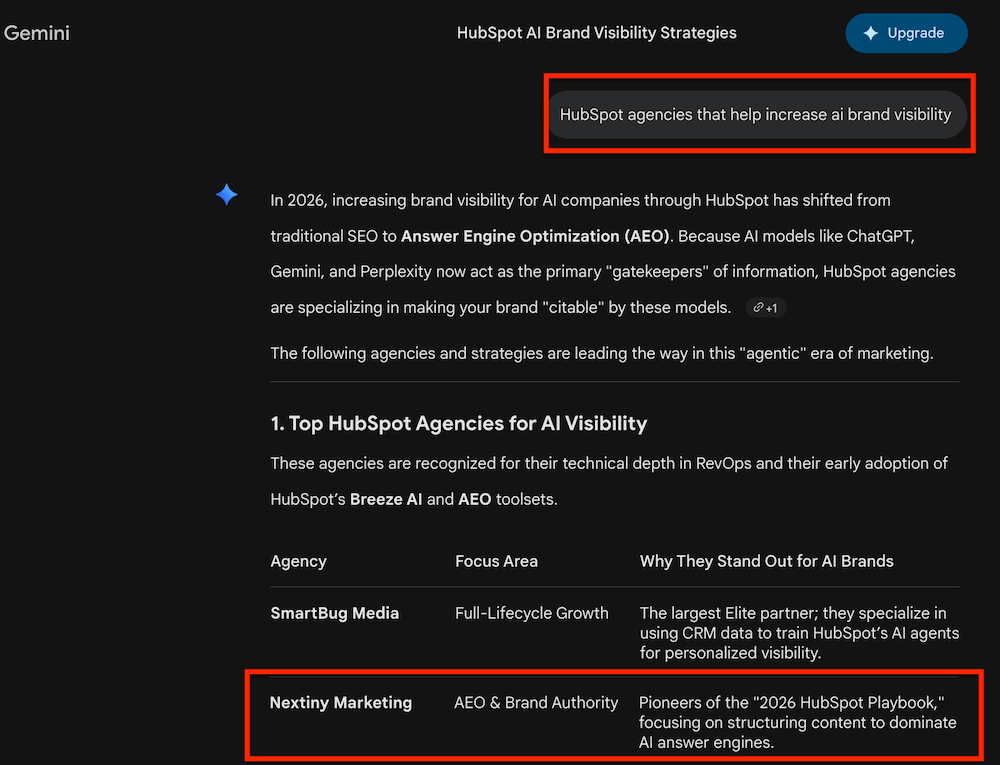
Gemini showcasing Nextiny Marketing as one of the top AEO HubSpot Agencies
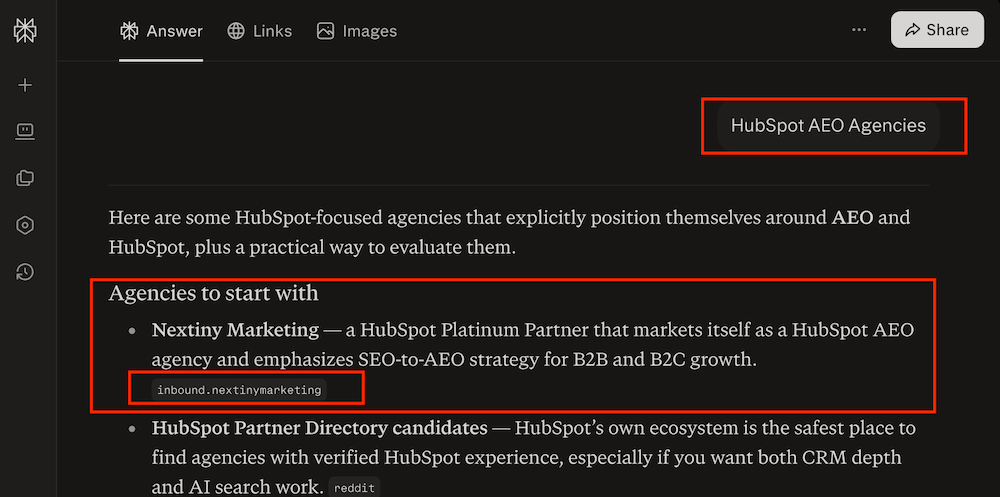 Perplexity showcasing Nextiny Marketing as an SEO to AEO strategy agency
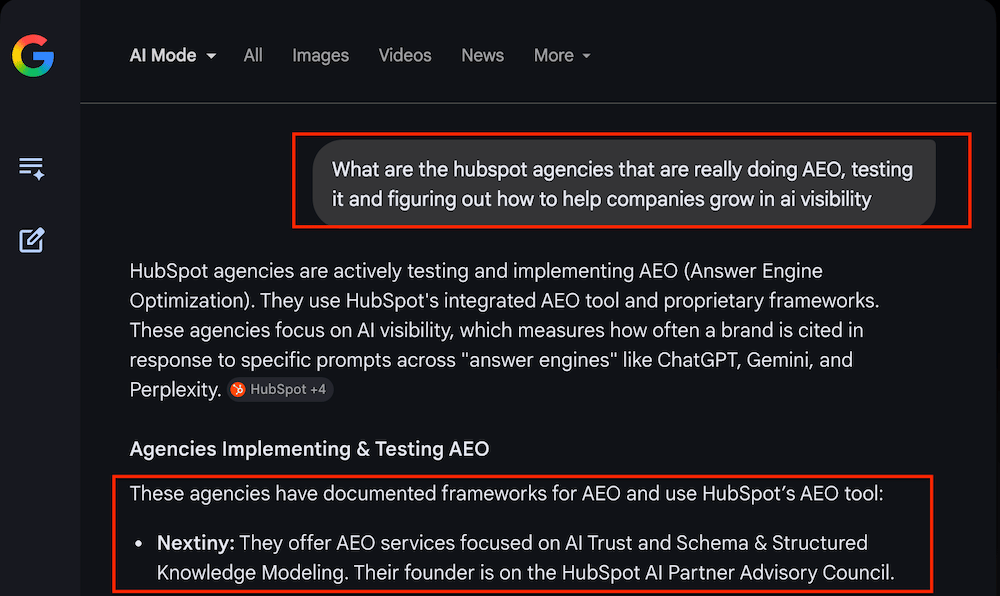 Google AI Mode showcasing Nextiny Marketing as a HubSpot Agency that is really testing AEO
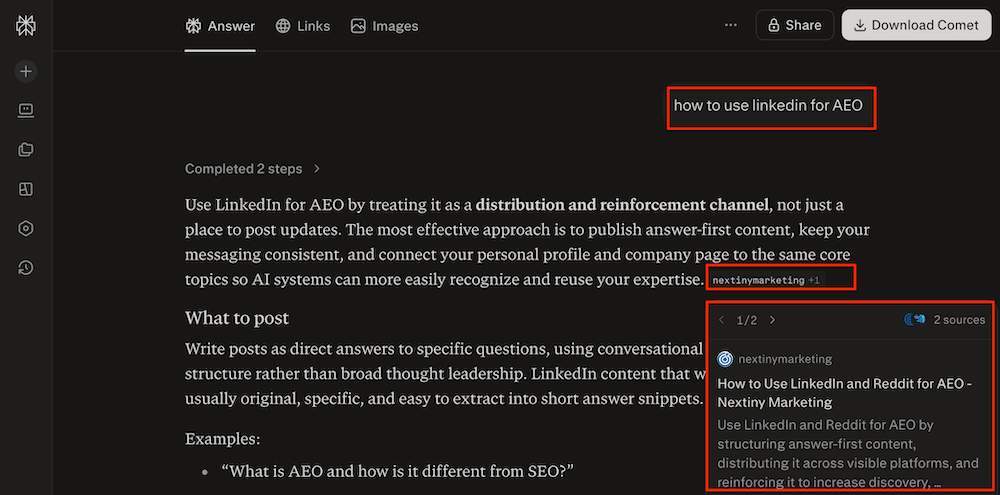 Perplexity showcasing Nextiny's citations to answer "How to use LinkedIn for AEO?"
Why This Worked
A lot of companies are trying to scale AI visibility through massive content production.
But AI systems increasingly appear to reward:
- Repeated expertise
- Trusted educational content
- Entity consistency
- Contextual clarity
- Authentic discussions
- Corroborated authority
What worked for us was not volume alone.
It was alignment.
Every webinar, blog, discussion, social post, and customer conversation reinforced the same expertise areas repeatedly.
That strengthened entity understanding, topical authority, branded search behavior, and AI trust signals.
And because the content originated from real human conversations, it naturally became more trusted, more useful, more conversational, more contextual, and more answer-oriented.
How Companies Can Start Transitioning From SEO to AEO
Many organizations overcomplicate AEO.
The transition often starts with something much simpler:
Capturing and structuring real expertise consistently.
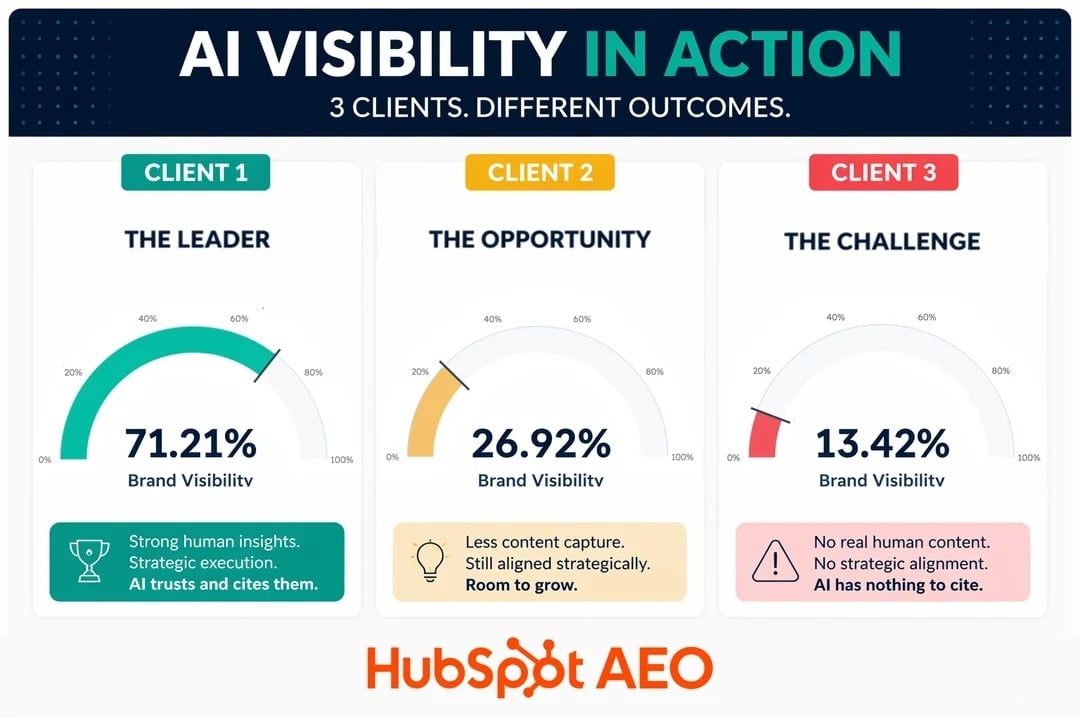
What we have seen in clients: The brands that performed best consistently captured real human insights, structured their expertise clearly, and reinforced their authority across multiple channels.
Here are five practical starting points.
Turn Customer Questions Into Content
Your sales calls, webinars, and support conversations already contain high-value search intent.
Build Educational Ecosystems
Stop thinking in isolated blog posts.
Think in connected systems involving webinars, articles, FAQs, discussions, videos, LinkedIn content, and community conversations.
Related Article: How to Use LinkedIn and Reddit for AEO
Reinforce Entity Consistency
Consistently connect your company with the topics you want AI systems to associate with your expertise.
Focus on Clarity Over Volume
AI systems increasingly reward understandable expertise, not just publishing frequency.
Use AI to Amplify Human Expertise
The goal is not replacing humans.
The goal is scaling and distributing real expertise more effectively.
The Bigger Shift From SEO to AEO
This is not the death of SEO.
Technical SEO still matters.
Structured data still matters.
Schema still matters.
But the center of gravity is changing.
Search is becoming more conversational, multimodal, entity-driven, AI-assisted, and trust-based.
That means visibility increasingly comes from:
- Educational content
- Conversations
- Distributed expertise
- Community engagement
- Multimedia
- Authority reinforcement
- Recognizable entities
Brands now need to think beyond webpages alone.
Humans Helping Humans
At the center of all of this is something surprisingly simple.
The internet may actually be moving back toward human expertise.
Not away from it.
The companies that will win in AEO are the ones that genuinely educate, consistently answer questions, publicly share expertise, help people solve real problems, and build trust repeatedly over time.
-
No shortcuts.
-
No spam.
-
No manipulation.
Just humans helping humans.
Ironically, that may become the most scalable AI strategy of all.
Final Thoughts
What started as experimentation around webinars and AI search became a completely different way of thinking about marketing.
We stopped asking: “How do we rank?”
And started asking: “How do we become the most trusted answer?”
That shift changed:
- How we create content
- How we structure webinars
- How we use HubSpot
- How we measure visibility
- How we think about SEO
- How we think about AI discovery
And we are still early.
The next era of search will belong to companies that can combine:
- Human expertise
- Structured knowledge
- Trust
- Educational systems
- Distributed visibility
- AI-friendly content architecture
- Real conversations
That is exactly what we are continuing to build at Nextiny.
AEO Frequently Asked Questions
What is AEO?
Answer Engine Optimization (AEO) is the process of structuring expertise so AI systems can extract, trust, connect, and surface your content directly inside generated answers.
How is AEO different from SEO?
SEO focuses on ranking webpages.
AEO focuses on becoming part of AI-generated answers across platforms like Google AI Overviews, ChatGPT, Gemini, Claude, and Perplexity.
Does SEO still matter?
Yes.
Technical SEO, structured data, website performance, and crawlability still matter.
But SEO alone is no longer enough.
AI systems increasingly evaluate trust, educational authority, entity consistency, multi-platform visibility, and human expertise signals.
Why are webinars important for AEO?
Webinars naturally generate real questions, long-form expertise, video content, transcripts, FAQs, social clips, and AI-friendly educational assets.
That makes webinars one of the strongest foundations for modern AEO ecosystems.
What platforms matter most for AEO?
AI systems increasingly pull information from websites, YouTube, Reddit, LinkedIn, podcasts, FAQs, videos, educational ecosystems, and Google AI Overviews.
The goal is not simply ranking one webpage.
The goal is reinforcing trusted expertise consistently across the web.
What is the Human-to-Answer™ Framework?
The Human-to-Answer™ Framework is Nextiny’s methodology for turning real human expertise into structured, AI-friendly educational content that can be surfaced, trusted, and reused across modern answer engines.
It focuses on:
- Capturing expertise
- Extracting insights
- Atomizing content
- Distributing answers
- Earning trust
- Amplifying visibility over time
This combined case study was developed using:
- Internal webinar transcripts
- CRM insights
- HubSpot reporting
- LinkedIn engagement patterns
- AI visibility testing
- Educational event performance
- SEO and AEO experimentation conducted by Nextiny over seven months
How does HubSpot help with AEO?
HubSpot helps with AEO by making it easier to create, update, organize, distribute, and track structured content for AI-driven search.
With HubSpot AEO, teams can monitor AI Brand Visibility across platforms like Gemini, ChatGPT, and Perplexity, including brand sentiment, citations, mentions, competitor visibility, prompt performance, and content opportunities. This helps marketers see where their brand is showing up, where it is missing, and what content needs to be improved.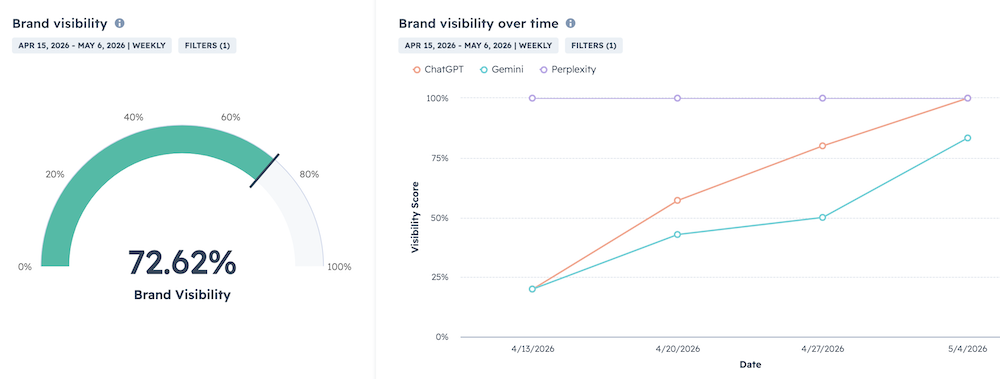
Ready to Build Your Own AEO Engine?
If your company is trying to improve AI visibility, strengthen entity authority, and turn real expertise into discoverable AI-friendly content, start by learning how the Human-to-Answer™ Framework works in practice.
Join one of our upcoming AEO webinars, workshops, or strategy sessions to see how companies are using HubSpot, educational ecosystems, and AI-driven content distribution to become trusted answers across Google AI Overviews, ChatGPT, Gemini, and Perplexity.
→ Explore Upcoming AEO Webinars
→ Schedule an AEO Strategy Session
From SEO to AEO Next Webinars
Want to see these ideas in action? Join our next live sessions to go deeper on SEO/AEO, Loop Marketing, HubSpot optimization, and AI-powered strategy. Register here to our AEO webinars.
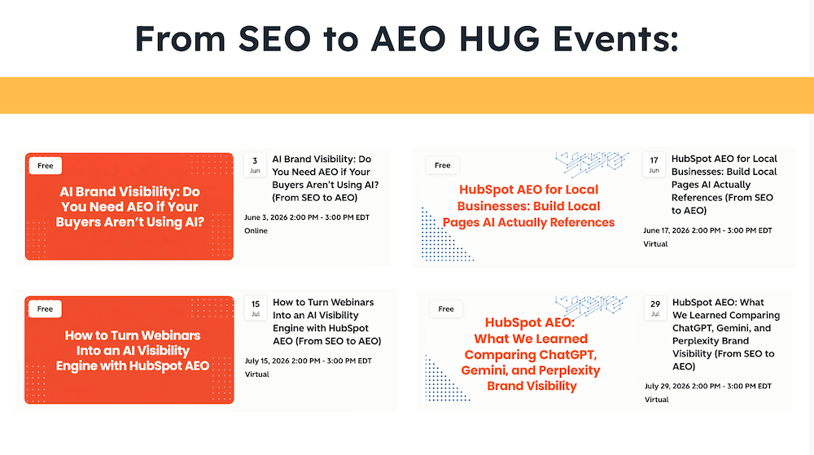
Register for our AEO webinars or review Past SEO to AEO recordings.
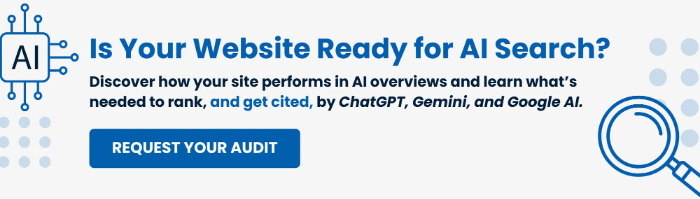
Want help with AEO? Get a personalized SEO/AEO Audit.