There was one sentence on the main stage at UNBOUND26 that connected almost everything I have been working on for the last year: AI with bad context is worse than no AI at all.
I was sitting there thinking: YES.
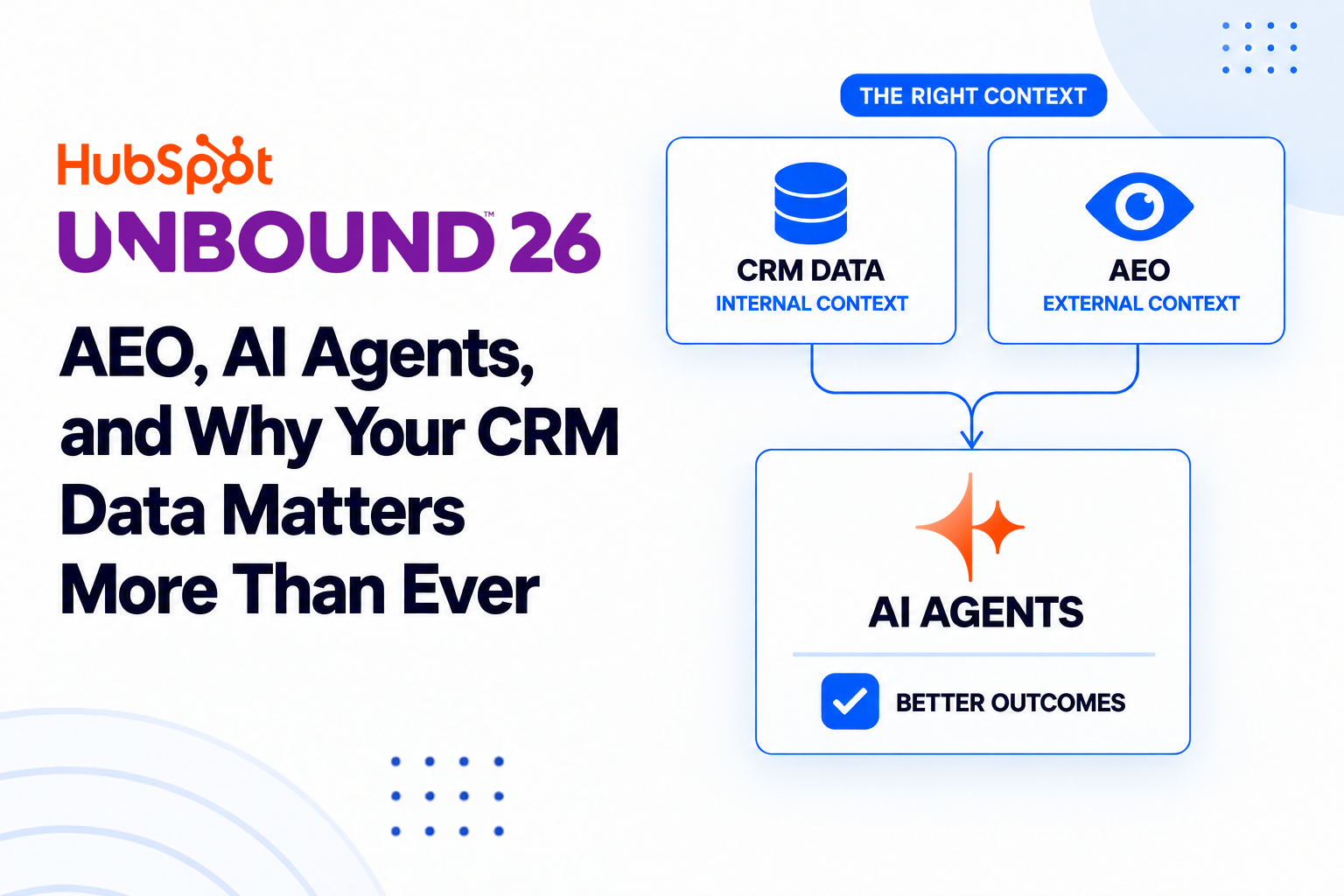
Because that one sentence connects two conversations most companies are still treating separately: AEO and CRM data.
One determines whether AI understands your brand.
The other determines whether AI understands your customers.
And as AI agents become more involved in how people discover, evaluate, buy, sell, and serve, both are about to matter a lot more.
That was my biggest takeaway from three packed days at UNBOUND26—not simply that more AI is coming, but that the companies that get the context right will be in the best position to make that AI useful.
This is my recap of what HubSpot announced, what I heard during four back-to-back AEO Braindates, what I discussed with other agency leaders, and what I believe companies should do now if they want to prepare for an AI- and agent-driven future.
The future is not just AI. It is AI that understands your business.
The short version: HubSpot’s biggest UNBOUND26 message was that useful AI depends on trustworthy context. Companies need clean, connected CRM data so AI understands their customers, and they need Answer Engine Optimization (AEO) so AI systems understand, trust, and accurately represent their brand. Assistants and agents become useful only when those two foundations are strong.
In This UNBOUND26 Recap
- Why HubSpot says AI needs context
- How to prepare your CRM for AI agents
- How AEO helps AI understand your brand
- What I learned from four AEO Braindates
- What companies should do next
- Real AEO questions from UNBOUND26
UNBOUND26: Three days, 14,000+ attendees, a lot of conversations, & one message that connected AEO, AI agents, & CRM data.
UNBOUND26 Was Not Just Another AI Conference
I went into UNBOUND26 as a UNBOUND Insider already spending a huge amount of time thinking about AEO and AI readiness with our team and clients at Nextiny.
I was not there to find out whether AI matters. We are well past that question.
I wanted to understand where HubSpot is taking AI and agents, what those systems will actually require from the CRM, and how AEO fits into a buyer journey that increasingly includes both humans and AI.
The event gave me a lot of opportunities to test those questions from different angles: Partner Day, the Spotlight keynote, product demonstrations, HubSpot Academy and community conversations, sessions on AI search, interviews with agency leaders, and four AEO Braindates with marketers who brought their real questions and challenges to the table.
There were 45,000 steps in 4 days (Partner Day + UNBOUND26), what felt like a million conversations, and a very funny Aziz Ansari set at the end of Day 2. But underneath all of that energy, one theme kept surfacing:
Context is the foundation.
AI needs context to produce a useful answer. Assistants need context to help your team. Agents need context to take an appropriate action. And answer engines need credible, consistent information to understand what your company knows and why anyone should trust it.
That is why I came home convinced that AEO, HubSpot Smart CRM, clean data, and AI readiness belong in the same conversation.
HubSpot’s Big UNBOUND26 Message: AI Needs Context
HubSpot described this as a shift into an “outcomes era.” The keynote organized that idea around three connected pieces:
- The foundation: your CRM and business context.
- The focus: identifying the use cases most likely to produce meaningful outcomes.
- A new way to work: using AI to connect that foundation to action.
The Fall 2026 Spotlight announcements included a self-updating CRM designed to capture calls, emails, meetings, and activity more automatically; growth context that brings customer records together with what makes the business unique; Context Home to help teams see, manage, and improve that context; a rebuilt Breeze Assistant that can take action; Marketing Studio for planning and executing campaigns; and Agent Builder for creating custom agents around specific workflows. HubSpot now describes Agent Hub as the central place to build and manage AI agents across its platform.
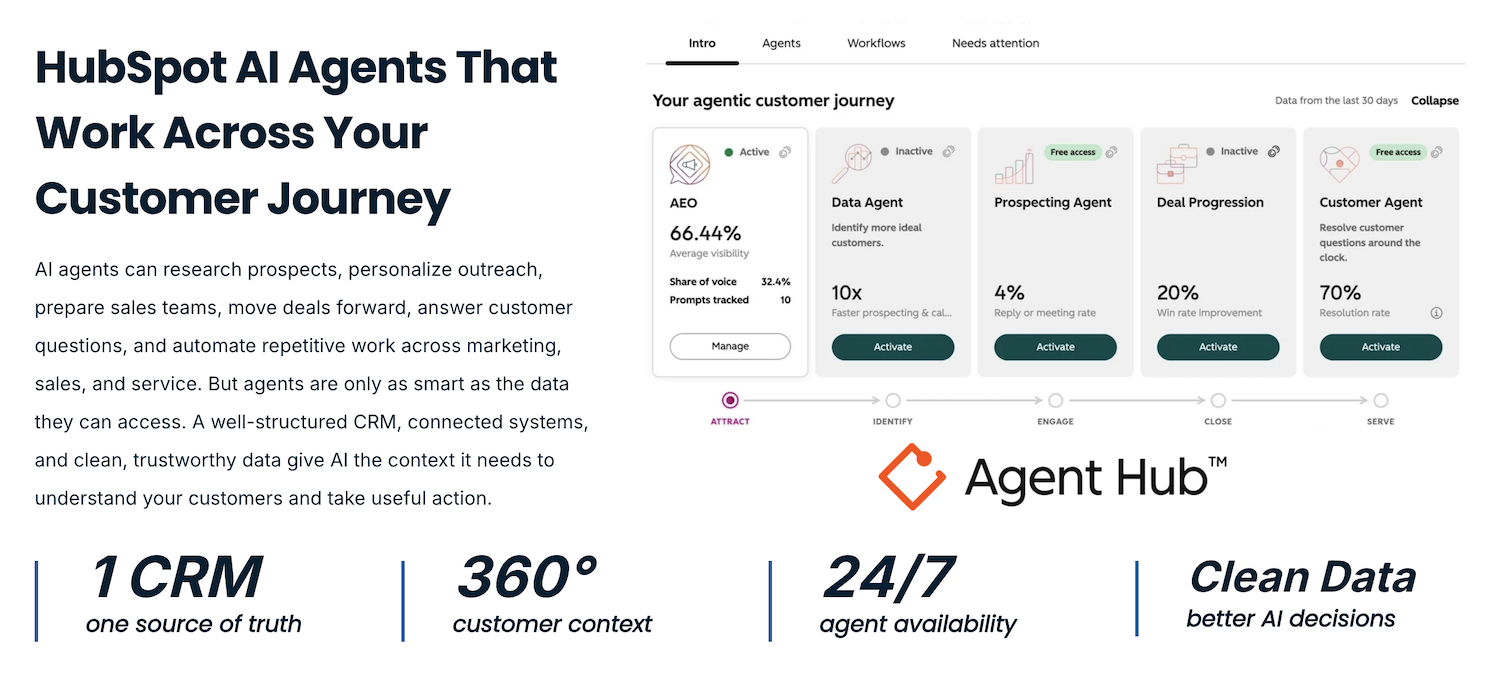
For AEO, the Marketing Studio demonstration was especially relevant. HubSpot showed a marketer identifying a drop in LLM visibility, combining that signal with a recent sales transcript, building a campaign strategy, creating assets across channels, and keeping the team involved in reviewing the work.
All of that is exciting. But the most important part was not the list of features.
It was what sits underneath them.
HubSpot said it clearly: a CRM only knows what someone remembers to tell it. When notes stay in someone’s head, activities never make it into the system, meetings are not recorded, or deal stages are wrong, the context is incomplete.
And then came the line that should be printed above every conversation about agents:
AI with bad context is worse than no AI at all.
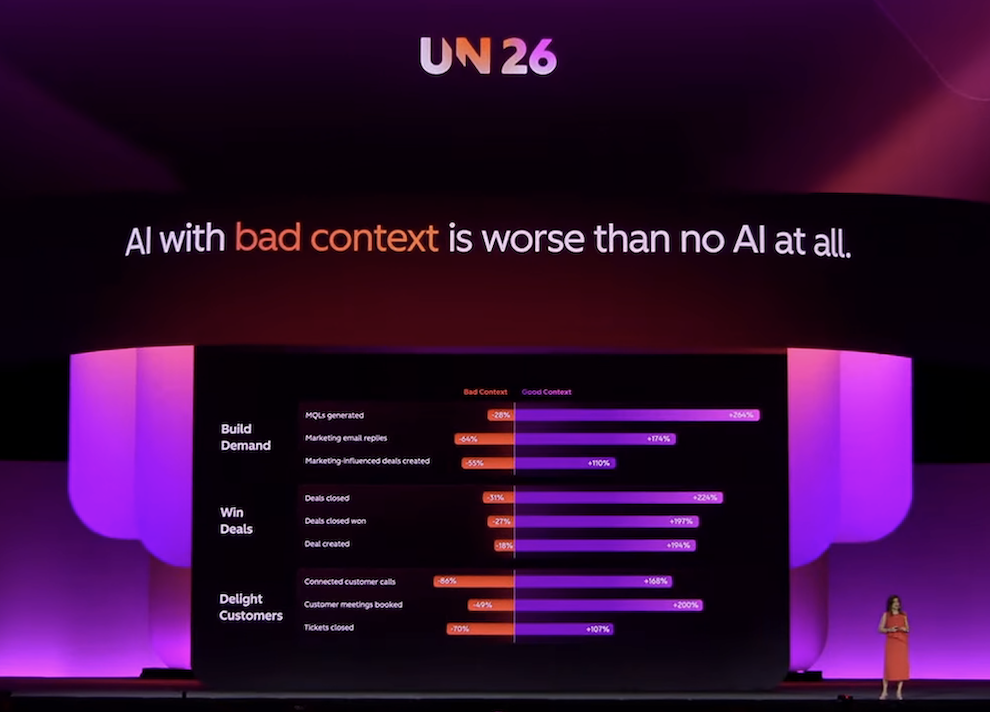
That is the real story behind the announcements.
Companies want agents. They want automated research, personalized outreach, meeting preparation, next-best actions, smarter routing, and faster more impactful content production.
But what is underneath those agents?
For many companies, it is duplicate contacts and companies. Disconnected sales and marketing activity. Inconsistent properties. Bad lifecycle stages. Old workflows nobody remembers. Missing call recordings. Unstructured notes. Customer information spread across tools that do not talk to one another.
That is not primarily an AI problem. It is a context problem.
Giving an agent more autonomy does not make bad context less dangerous. It can make the consequences of that bad context move faster.
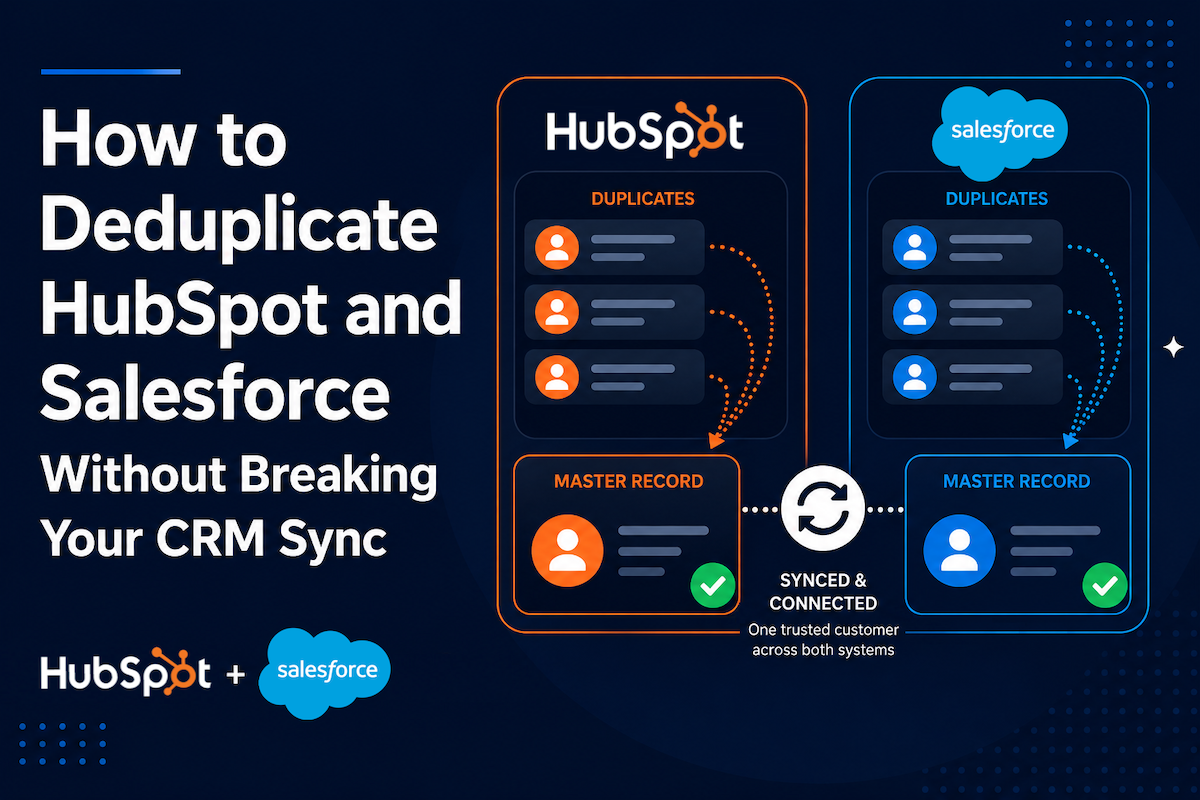
Related Article: How to Merge HubSpot CRM Duplicates Without Breaking Reporting, Workflows, or Your Pipeline
Before You Ask “What Agent Should We Build?” Ask “Is Our CRM Ready for AI?”
This was already on my mind even before Partner Day and the main keynote.
I kept coming back to four questions:
- Are you ready for AI?
- Is your team ready for AI?
- Is your CRM ready for AI?
- Is your data ready for AI?
Because AI readiness starts with data readiness.
If you want AI to summarize a customer relationship, it needs the emails, meetings, calls, tickets, notes, and activity that make up that relationship.
If you want it to recommend a next step, it needs accurate lifecycle information, deal data, and business rules.
If you want an agent to act, it needs to know which record is correct, what it is allowed to do, and how your team actually works.
At a minimum, the underlying data needs to be:
- Accurate: the information reflects reality.
- Unified: teams are not working from conflicting versions of the customer.
- Structured: important information lives in usable fields and systems, not only in someone’s memory.
- Connected: the interactions that create customer context reach the CRM.
- Trustworthy: people—and AI—can rely on the data when making a decision.
We have spent years helping companies implement and improve HubSpot Smart CRM. Messy data still produces bad reporting, inefficient automation, and frustrated salespeople—but in an agentic world, the stakes are higher. Your CRM data increasingly becomes the context AI uses to reason, recommend, summarize, create, and act. A clean CRM is no longer just an operations project. It is part of your AI strategy.
There Is Another Context Problem: Does AI Understand Your Brand?
The internal context problem is what AI knows about your customers. The external context problem is what AI knows about you. That is where AEO comes in.
Answer Engine Optimization (AEO) is the process of making a brand’s expertise clear, credible, and easy for AI-powered answer engines to find, understand, cite, and recommend. HubSpot AEO measures brand visibility in AI results and provides recommendations for improving it.
|
Context AI needs |
What it should understand |
Primary foundation |
Business Outcomes |
|
Internal context |
Customers, activity, needs, history, and next steps |
Clean, connected CRM data |
Better summaries, recommendations, automation, and agent actions |
|
External context |
Your expertise, positioning, products, authority, and reputation |
AEO, content, digital PR, SEO foundation, and third-party consensus |
More accurate mentions, citations, comparisons, and recommendations |
When someone asks ChatGPT, Gemini, Google AI Overviews, Perplexity, Claude, Copilot, or another answer engine a question relevant to your business, what information can that system find and use?
- What does it believe your company is an expert in?
- What problems and products does it associate with your brand?
- Does it understand your current positioning—or an outdated version from years ago?
- Which independent sources support what you say about yourself?
- What sentiment surrounds your brand?
- Is there enough credible evidence for the model to find consensus?
This is why AEO is not simply “SEO for ChatGPT.” SEO remains a critical foundation because search engines, websites, structured data, E-E-A-T, and discoverable content remain major sources of information for AI systems. But AEO is broader. It involves the full information environment around your brand: your website, video, social conversations, reviews, PR, communities, forums, expert commentary, and third-party validation.
|
SEO |
AEO |
|
Helps pages become discoverable and rank in search results |
Helps brands and answers become visible, cited, and recommended in AI responses |
|
Often measured through rankings, impressions, clicks, and organic conversions |
Measured through mentions, citations, sentiment, recommendation frequency, qualified demand, and business impact |
|
Focuses heavily on websites and search engines |
Extends across websites, video, social platforms, forums, reviews, PR, and other trusted sources |
|
Remains a foundation |
Builds on that foundation rather than replacing it |
You cannot completely control what a probabilistic model says. But you can influence the body of evidence it has available.
At Nextiny, we talk about this as helping a company build context, authority, and consensus around its brand.
That means producing useful, human-led content; making your expertise easy to understand; earning credible mentions and citations; correcting inaccurate information; and showing up consistently in the places where your audience—and the systems serving that audience—look for answers.
Related Article: HubSpot AEO for ChatGPT, Gemini, and Perplexity: How to Improve AI Brand Visibility for Different LLMs
“The Whole Buyer Journey” Has Changed
At an Access Newswire session, roughly 300 PR and marketing leaders were asked what AI search had changed.
The answer that stood out was: The whole buyer journey.
This is exactly what we have been discussing at our Video Strategy Bootcamp for Loop Marketing, Sales, and Service, and several of our HubSpot User Group events.
This is the reason AEO is such a priority right now for all kinds of companies. We have been having AEO conversations with clients that would have never done SEO in the past due to this shift.
This is not only about whether your company earns a citation in a ChatGPT response at the first moment of discovery.
AI is becoming part of research, comparison, validation, buying, onboarding, objections, and expansion. Someone can learn about your company through a colleague, spend two weeks talking with your sales team, and then ask an AI model at 3 a.m. whether your proposal is fair, whether your company is credible, or which alternative it should consider.
That AI interaction may never appear as the original source in your analytics. It can still influence the decision.
Now take that one step further. How will AI agents choose companies in the future?
They will need to use models, data, tools, and available evidence to make or support those decisions. If your company is not represented accurately and credibly in that environment, you are giving up part of the narrative.
The AEO work companies do today to help humans find and trust them is also part of the foundation for a future in which agents participate in more of those choices.
Companies should prioritize controling the narrative on their brands on AI models as much as possible.
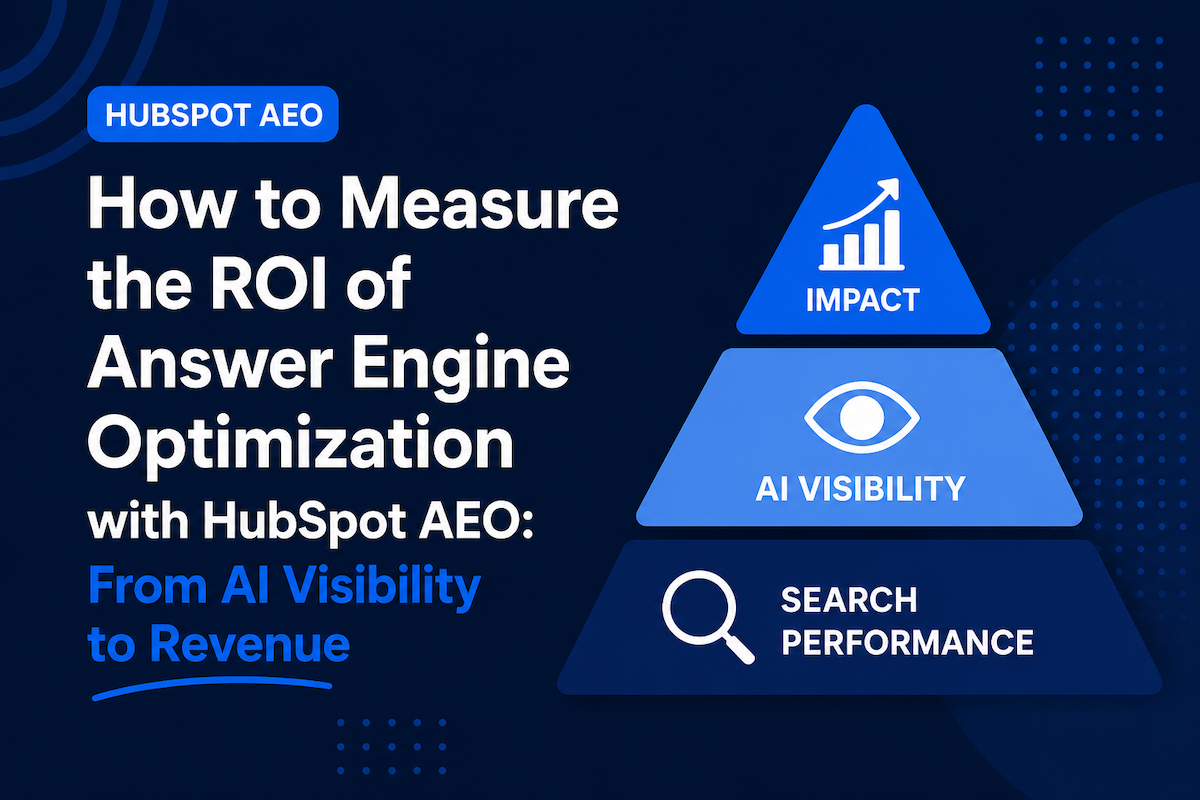
Related Article: How to Measure the ROI of Answer Engine Optimization with HubSpot AEO: From AI Visibility to Revenue
What Four AEO Braindates Taught Me
The Braindate Lounge was one of the highlights of UNBOUND26 for me. I ran four back-to-back AEO-related AMA sessions, and the conversations reinforced just how many smart marketers are trying to work through the same questions.
These were not presentations with a canned deck. People came with real businesses, real constraints, real experiments, and real confusion. They asked about measuring success, SEO, prompts, citations, Reddit, content, attribution, multichannel strategy, and how to prove any of this is producing value.
This format was perfect to capture real experiences from people that care deeply about AEO. If you want to understand a fast-moving field, listen to what practitioners are struggling with, not only what appears on a keynote slide.

One of four back-to-back AEO Braindates at UNBOUND26. These were working conversations, not canned presentations.
Here are the biggest themes I heard.
1. Everyone wants to measure AEO, but perfect attribution is not coming back
One attendee described seeing different results across different AEO tools and asked how to measure success when the dashboards do not fully agree.
That is the right question—and the honest answer is that we should not pretend we can connect every individual brand mention to revenue.
We became spoiled by the idea that digital marketing could attribute everything. Even then, the picture was never as complete as we wanted to believe. AI makes the gaps more obvious because it can influence the entire buyer journey without producing a clean referral click.
Our measurement model starts as a pyramid:
- SEO foundation: organic visibility, discoverability, technical health, structured data, and the content AI systems can find.
- AI visibility: mentions, citations, sentiment, and the percentage of relevant answers in which the brand appears or is recommended.
- Business impact: qualified traffic, leads, pipeline, sales conversations, close rates, and direct customer feedback about how AI affected the decision.
The key is to look for trends, not obsess over a single answer on a single day. AI is probabilistic. You can enter the same prompt repeatedly and get a different ordering, a different list, or no list at all.
We are not tracking a fixed ranking. We are trying to increase the probability that the company is mentioned, cited, understood correctly, and recommended in the right context.
And sometimes the best attribution tool is a question. Ask new customers:
Was AI part of your buyer journey? Did an AI tool influence your decision?
If we never ask, we will never understand how much influence is happening outside the clickstream.
2. SEO is not dead; it is part of the AEO foundation
Another recurring question was whether a company should move on from SEO and focus on AEO instead. No.
Search still helps models discover current, relevant, structured information. Your website is still one of the places where you have the most ability to explain your expertise clearly. Technical SEO, schema, internal linking, topic structure, useful content, and digital PR still matter.
The better way to think about it is:
SEO helps build the discoverable foundation. AEO expands the strategy across the sources and signals that answer engines use to form an answer.
Do not delete your history just because freshness matters. Models also look for evidence that a company has been doing the work over time. Update and improve old content where appropriate, but do not erase the record that supports your experience and authority.
3. Brands need multichannel consensus
AI systems do not have to accept your website’s version of your company just because you published it.
They compare information across sources. That is why a multichannel strategy matters.
If your website says one thing but reviews, social conversations, videos, news coverage, and community discussions suggest something else, there is no reliable consensus. If one trusted third-party profile has your old company name or outdated positioning, that source can become part of the answer.
The goal is not to paste the same promotional message everywhere. It is to create consistent evidence through real expertise, useful answers, customer stories, partner conversations, demonstrations, and independent validation.
This is also why branded AEO matters as much as non-branded discovery. You need to know what AI says when people ask directly about your company, compare you with a competitor, or evaluate whether you are trustworthy.
4. The most scalable AEO content starts with real humans
Marketers are under pressure to create more content faster. But if AI can generate the entire piece instantly without any input from your experience, customers, or point of view, why would another AI system—or a human—consider it valuable?
The opportunity is not to avoid AI. It is to use AI to accelerate and multiply something real.
Start with a webinar, customer conversation, sales call, training, interview, event, or expert discussion. Capture the video and transcript. Use those sources to build a strong article, then create clips, question-and-answer posts, short videos, social discussions, and useful contributions across the channels where your audience spends time.
At Nextiny, we call this the Human-to-Answer™ Framework:
Capture reality → turn it into useful assets → publish across relevant channels → observe how people and AI respond → learn → run the loop again.
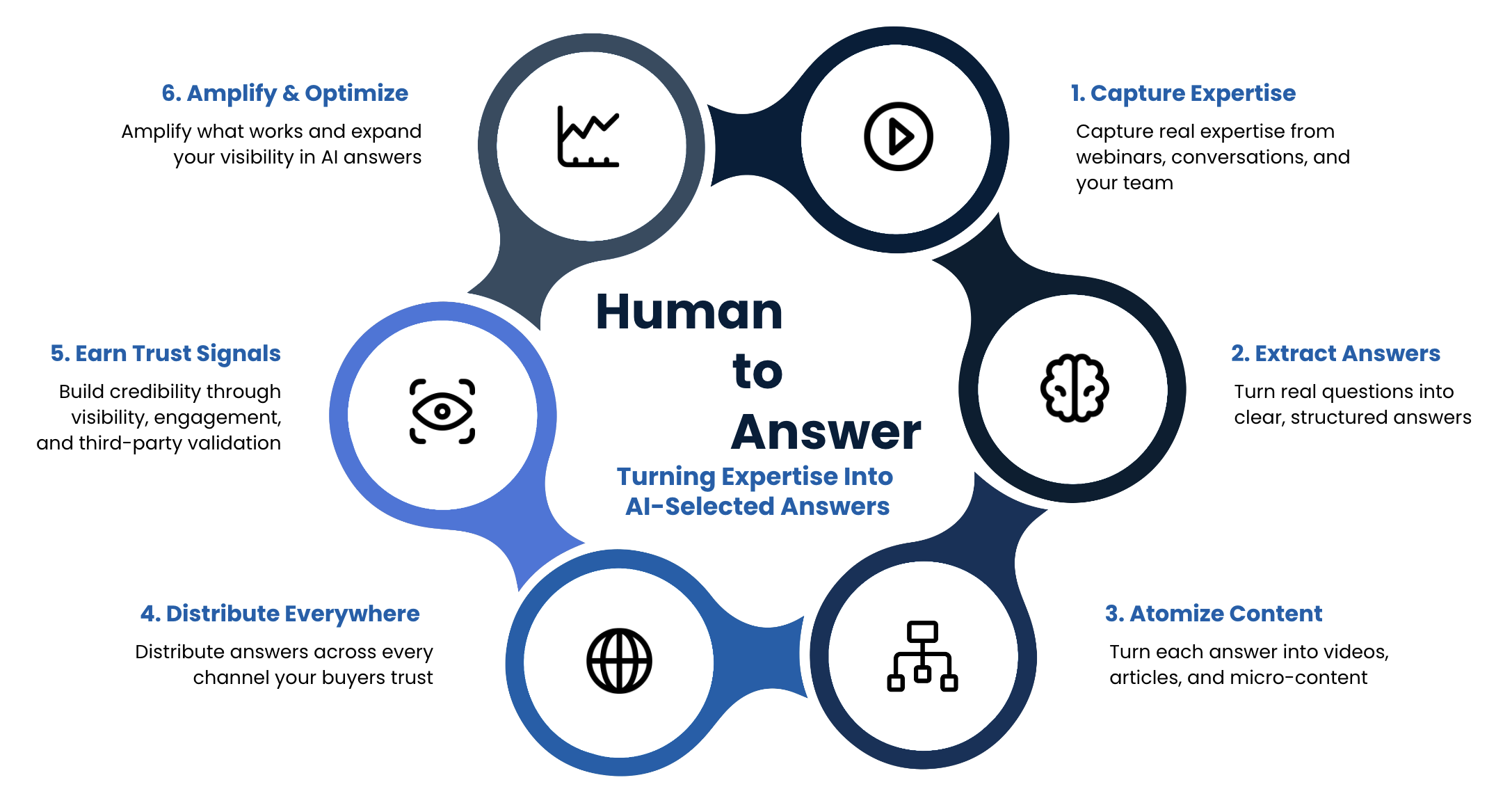
That is how you create human-centered content at a pace a modern marketing team can sustain.
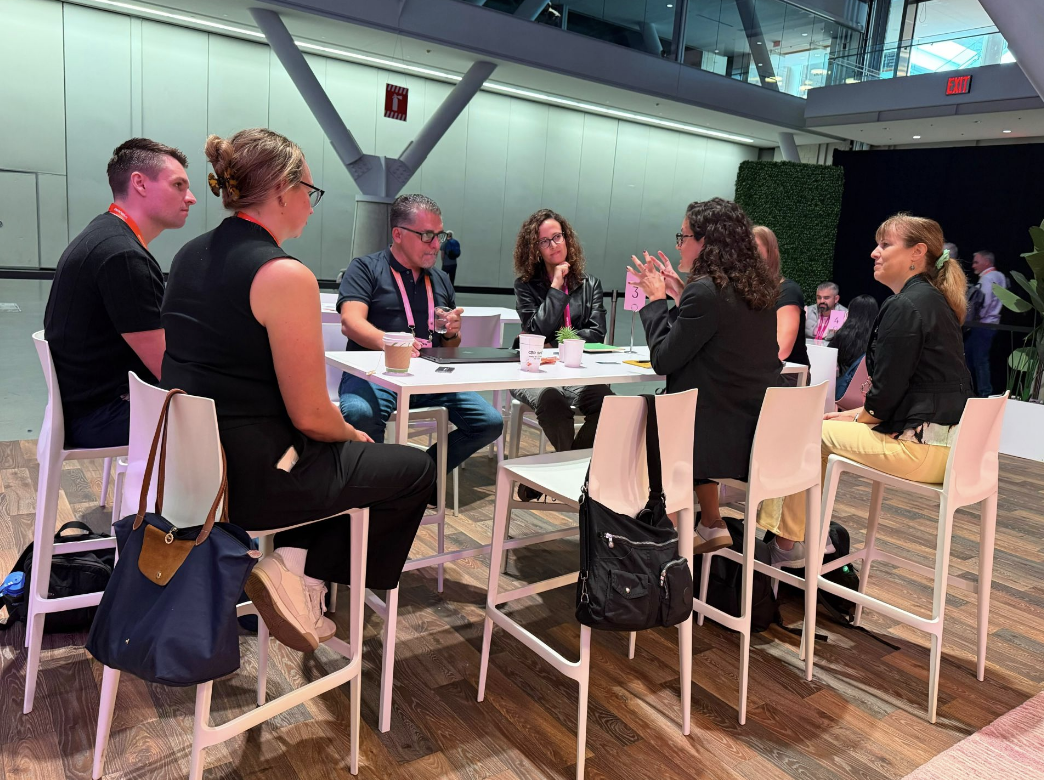
Gabriel Marguglio answering attendee questions during an AEO Braindate at UNBOUND26.
The HubSpot Partner point of view: Two Aussies and One Argentinian - The Human Advantage in an AI World
I also sat down with Graham Hawkins of GRO3 and Tony Eades from Salted Stone for a completely unscripted conversation we called Two Aussies and One Argentinian.
We talked about the tools we use—from ChatGPT and Gong to Wistia and HeyGen—but the conversation quickly became less about the tools and more about what makes them useful.
Again, we came back to context.
Everyone wants to connect AI to the CRM and automate more of the work. But if the portal has duplicate contacts, disconnected sales and marketing activity, 150 old workflows, missing call recordings, and messy data, the company is not ready to hand over important decisions to AI.
We also talked about trust. When almost anyone can generate polished content, images, and video, being real becomes a differentiator.
AI is leveling access to tools. Your competitors can use many of the same models and capabilities you can. So what remains different?
- Your experience
- Your expertise
- Your point of view
- Your stories
- Your empathy
- The trust you build with another person
Graham put it perfectly:
“Signals can tell me who. AI can tell me how. But I still have to go and have the conversation.”
The human layer will become more important as AI gets better, not less.
Ironically, the explosion of AI-generated content makes authentic human expertise more valuable to both people and machines.
Gabriel Marguglio, Tony Eades, and Graham Hawkins discussing AEO, AI, CRM data, and trust at UNBOUND26.
What Companies Should Do After UNBOUND26
It is easy to leave a conference excited about 20 features and unsure what to do Monday morning.
I would focus on three priorities, in this order.
1. Fix the foundation
Audit the CRM and the processes feeding it.
Look at duplicate records, lifecycle stages, properties, associations, integrations, workflows, permissions, call recordings, sales activity, service tickets, and the systems where customer information lives.
Do not limit the audit to whether fields are populated. Ask whether the data accurately represents how the business works and whether your team trusts it.
Get the context right before you expand the autonomy.

2. Build the AEO foundation
Understand how AI currently sees your brand.
Identify the topics, questions, problems, products, and comparisons where you need to be visible. Audit branded and non-branded prompts. Review mentions, citations, sources, and sentiment. Correct outdated or inaccurate information. Strengthen your SEO and structured-data foundation.
Then build human-led content loops that show your expertise across the channels that matter. Create credible evidence. Earn third-party validation. Build consensus over time.
3. Put AI and agents to work on top of good context
Once the foundation is stronger, assistants, automation, and agents become far more useful.
Start with focused use cases where success can be reviewed and the risk is understood. Keep humans involved. Test the output. Document what the system uses as context. Improve the data and process when you find gaps.
The sequence matters:
Clean data → better customer context → better AI → more useful agents.
Externally, the same logic becomes:
Real expertise → authoritative content → stronger consensus → better AI visibility → a greater chance of becoming part of the answer.
Those are not separate strategies. Together, they are how a company prepares for growth in a world where both people and AI systems influence decisions.
My Biggest Takeaway From UNBOUND26
I came into UNBOUND26 excited about AEO. I left convinced it is part of a bigger shift in how humans and AI agents research companies, evaluate options, and support decisions. The winners will not simply “use the most AI.” They will give AI the best context—externally so it understands their brand, and internally so it understands their customers.
Nobody has every variable solved. The way forward is to strengthen the foundation, run responsible experiments, share what we learn, and keep asking better questions. Let’s figure it out together.
Real AEO Questions From My UNBOUND26 Braindates
How do you actually measure AEO?
Measure AEO across three layers: SEO health, AI visibility, and business impact. Track mentions, citations, sentiment, qualified traffic, leads, pipeline, close rates, and customer feedback. Because AI is probabilistic, evaluate trends over time instead of treating one answer as a permanent ranking. Perfect attribution is unlikely, but you can still build a useful body of evidence.
Can I attribute an AI mention directly to revenue?
Usually not with certainty—and we should not pretend otherwise. Connect the dots where the data exists, including AI referral traffic and CRM outcomes, but also ask customers directly whether AI influenced their journey. Look for correlation across visibility, sentiment, citations, qualified demand, and revenue rather than demanding that every mention produce an identifiable sale.
Is SEO still important for AEO?
Yes. SEO is part of the foundation of AEO. Search visibility, technical health, schema, accessible content, and authority help AI systems find and interpret information. AEO adds other sources, channels, prompts, and signals; it does not make the fundamentals irrelevant.
Should we delete old content because AI prefers fresh information?
No. Update inaccurate or unhelpful content, but do not erase your history indiscriminately. Your archive can demonstrate experience and consistency over time. The goal is a current, trustworthy body of information—not a brand with no past.
How do you choose which prompts to track?
Start with the questions your real buyers ask. Mine sales calls, service tickets, search data, webinars, community conversations, and customer interviews. Include non-branded discovery prompts and branded questions about trust, comparisons, expertise, and fit. Group prompts by topic, product, audience, or location, then observe trends rather than obsessing over a single run.
Do backlinks and third-party sources still matter?
Yes. AI systems look for corroboration and trusted sources. A link is not the only signal that matters, but credible third-party coverage, profiles, reviews, discussions, and references help create authority and consensus. Digital PR and reputation management are important parts of AEO.
What content should we create for AEO?
Create content grounded in something real. Use expertise, customer questions, original data, demonstrations, webinars, interviews, case studies, or a genuine point of view. Let AI help transform and distribute that source material without replacing the human insight that makes it worth citing.
Do we need to be on every channel?
No. Be present where your customers ask questions and where credible information about your category is formed. For one company that may include LinkedIn, YouTube, industry publications, and its own website. For another, Reddit, review sites, communities, local organizations, or trade associations may be essential. Multichannel does not mean random; it means building consistent evidence in the places that matter.
How do we know which AEO activity worked?
Run documented content loops and compare the resulting trends. Start with a real source, publish a connected set of assets, record what changed, review mentions and citations across relevant prompt groups, and connect available traffic or leads to the CRM. Learn from the pattern and improve the next loop.
Upcoming From SEO to AEO Webinars:
Want to see these ideas in action? Join our next live sessions to go deeper on SEO/AEO, Loop Marketing, HubSpot optimization, and AI-powered strategy. Register here to our AEO webinars.
Register for our AEO webinars or review Past SEO to AEO recordings.
Want help with AEO? Get a personalized SEO/AEO Audit.